
Welcome to the Jungle, and Gardens as Gateway Drugs (18-24 May)
This week’s weather
The frosts have finally passed (although not according to Charles Dowding, I see), so protection comes off beans.
There’s been some rain this week but not enough to soak the ground for longer than a few hours. Garden plants were visibly suffering from drought and during the day even tough perennials like the californian poppy that proliferates around our pathways, were wilting.
Really hot day towards end of the week and then heavy rain which was a massive relief. It didn’t last long though, and then was followed by three days of strong winds which ripped new growth off the trees and dislodged a couple of occupied bird boxes.
We could have done with more rain, but even that little amount has caused a jungle of weeds, long grass and comfrey, to flourish around the edges of the garden. We also have to mow the lawn every few days (the one garden task that Jim actually volunteers for!).
Welcome to the Jungle
In response to the encroaching jungle, lovely Jim has bought us a strimmer (or ‘weed-whacker’ for the Americans) for our birthdays, so we shall have much fun taming the wild growth in the garden and out in the paddock. I’m intending the use the huge comfrey plants to boost the sluggish compost heaps and make comfrey tea. I’ve never done this before, but my permaculture tutor assures me that it’s magic stuff and can also be done with nettles. Apparently comfrey and nettles are adept at accumulating minerals (particularly NPK) which they release upon decomposition or fermentation. I’m told you simply harvest the comfrey, chop it and mash it to add directly to the compost heap, or chop it and cover it with water in a bucket then leave it for a few weeks to become hideously stinky before diluting and spraying or administering.
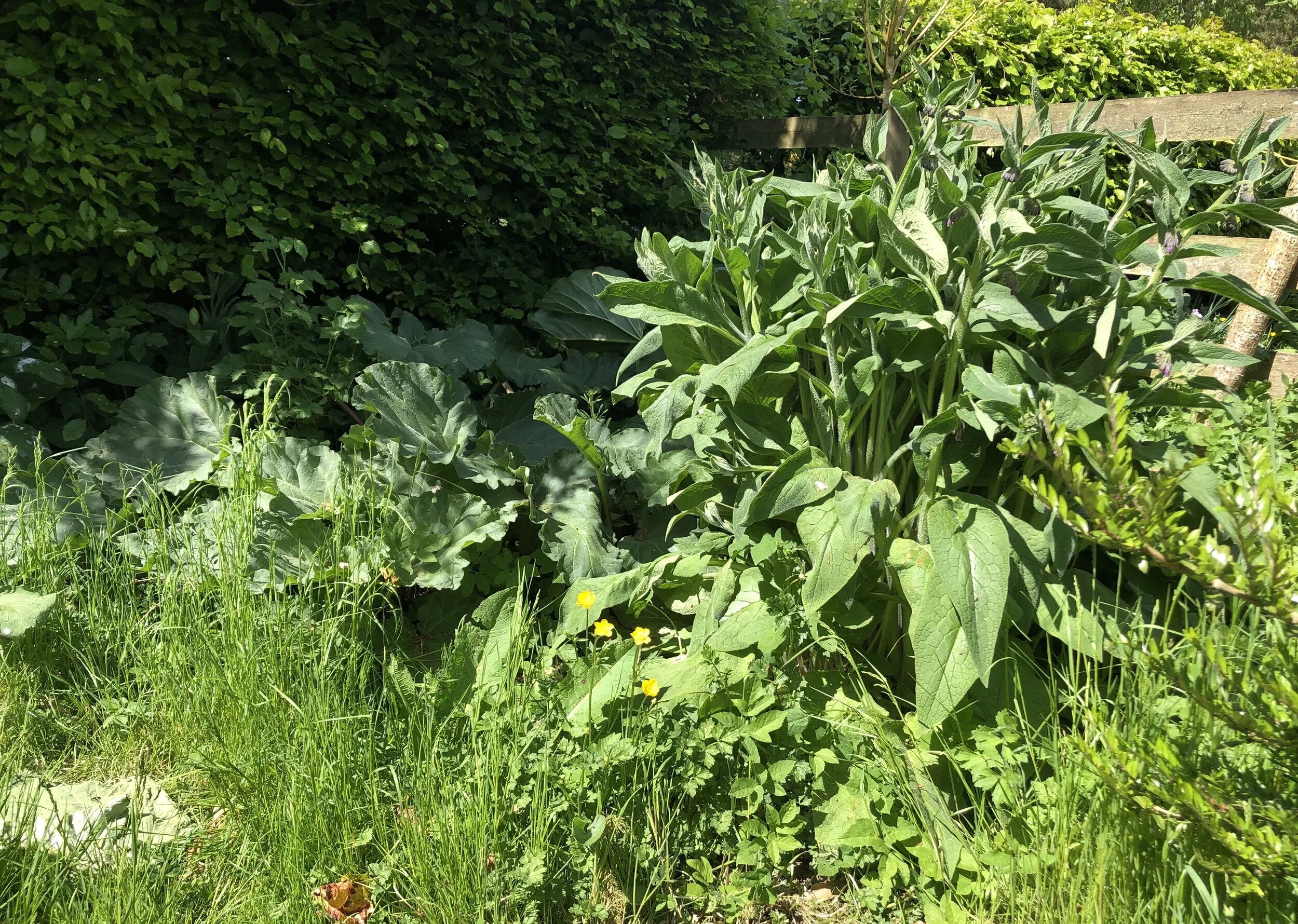
Rhubarb, comfrey, grasses and buttercups taking over the world.
Gardener-Overwhelm and Planning Ahead
With all the new growth I’m beginning to feel that sense of ‘gardener-overwhelm’. Everywhere I look there is something to do, or a plant that seems to be in need, but I only ever manage to complete the basics - watering, preventing the jungle from smothering my plants, planting out stuff from the tunnel when its virtually screaming to be released. As a result, I’ve been thinking a lot this week about how I can construct next year’s veg garden to be low maintenance, as well as beautiful and productive. It seems like a gargantuan task that will probably start in the autumn and will have to be done in stages.
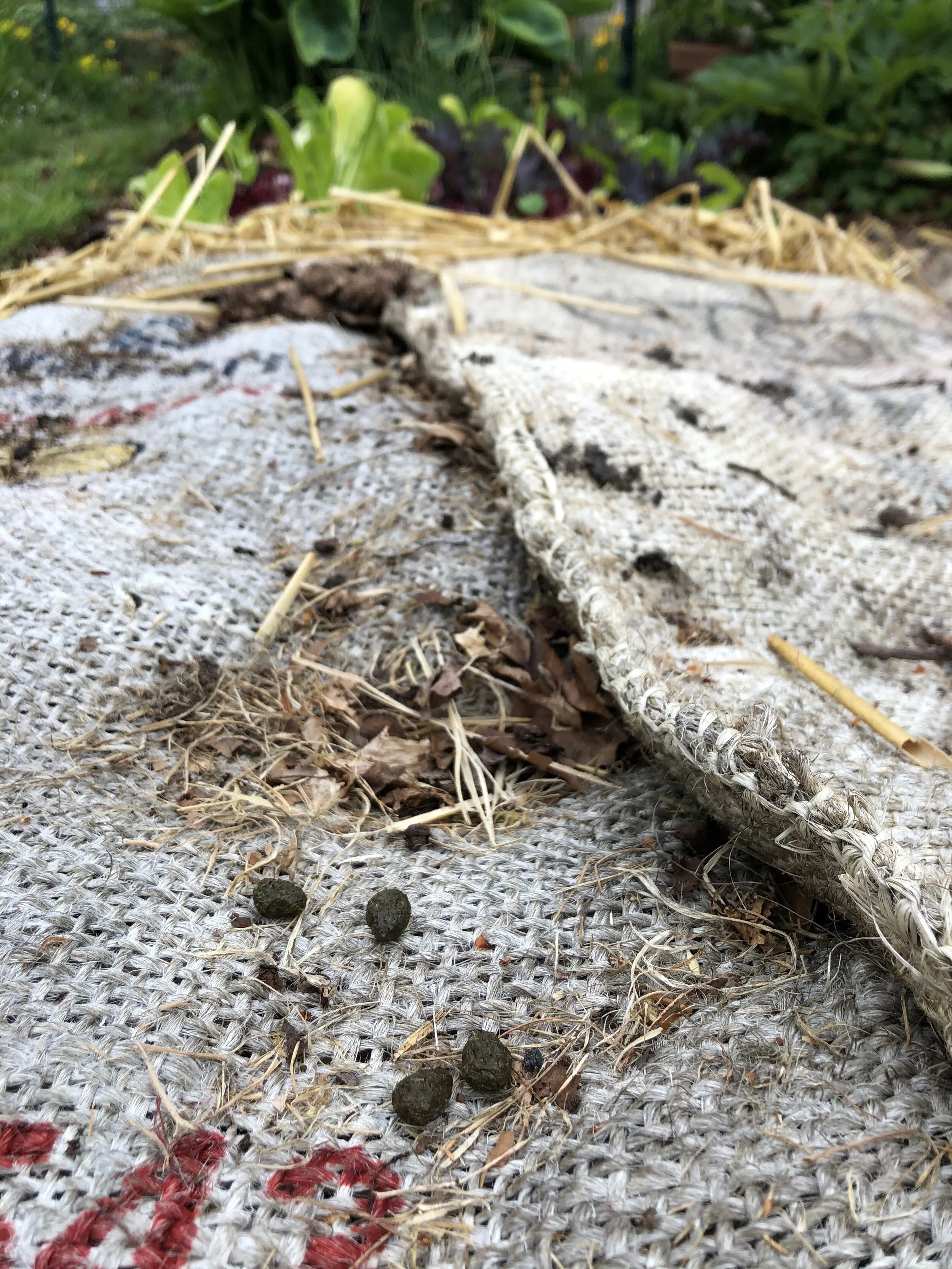
Evidence of rabbits in the veg patch
I definitely want to exclude lawn from the veg area as mowing in between beds is tricky and time consuming, and the lawn is gradually encroaching on the beds. Other priorities are making the garden beautiful - a mix of annual veg and herbs, perennial veg and flowers - and attractive to be in with easily accessible paths and sitting areas. Pest-proofing is also top priority as the rabbits have broken into the garden again and are beginning to munch their way through my veg plants.
I’m so attracted by the idea of no dig and have been gazing at Charles Dowding’s garden at Homeacres, but I’m not so sure about the straight edged, uniform beds. In permaculture the principle of valuing the marginal encourages the creation of maximal edge, and emulating nature by excluding straight lines. I feel it’s important that the garden encourages curiosity, creativity and fun, but without being whimsical (no ‘garden art’, fanks).
There are also a number of practical elements, such as wind and shade (called ‘sectors’ in permaculture - i.e. the influences that you cannot control and so need to learn how to work with). The area I had assumed would make the best veg garden is actually quite shady. I found a photo of the same area from the 90s - absolutely chokka with flowers - and see that the trees to the south were a third their size. I did pollard the trees in the winter, but they’re still of considerable size. However, they are providing wind protection, habitat for the birds - there is a constant cacophany of chirrups from that direction - and are beautiful, particularly now in the spring with hawthorn and holly blossoms.
Much to think about and I already feel like time is running out.
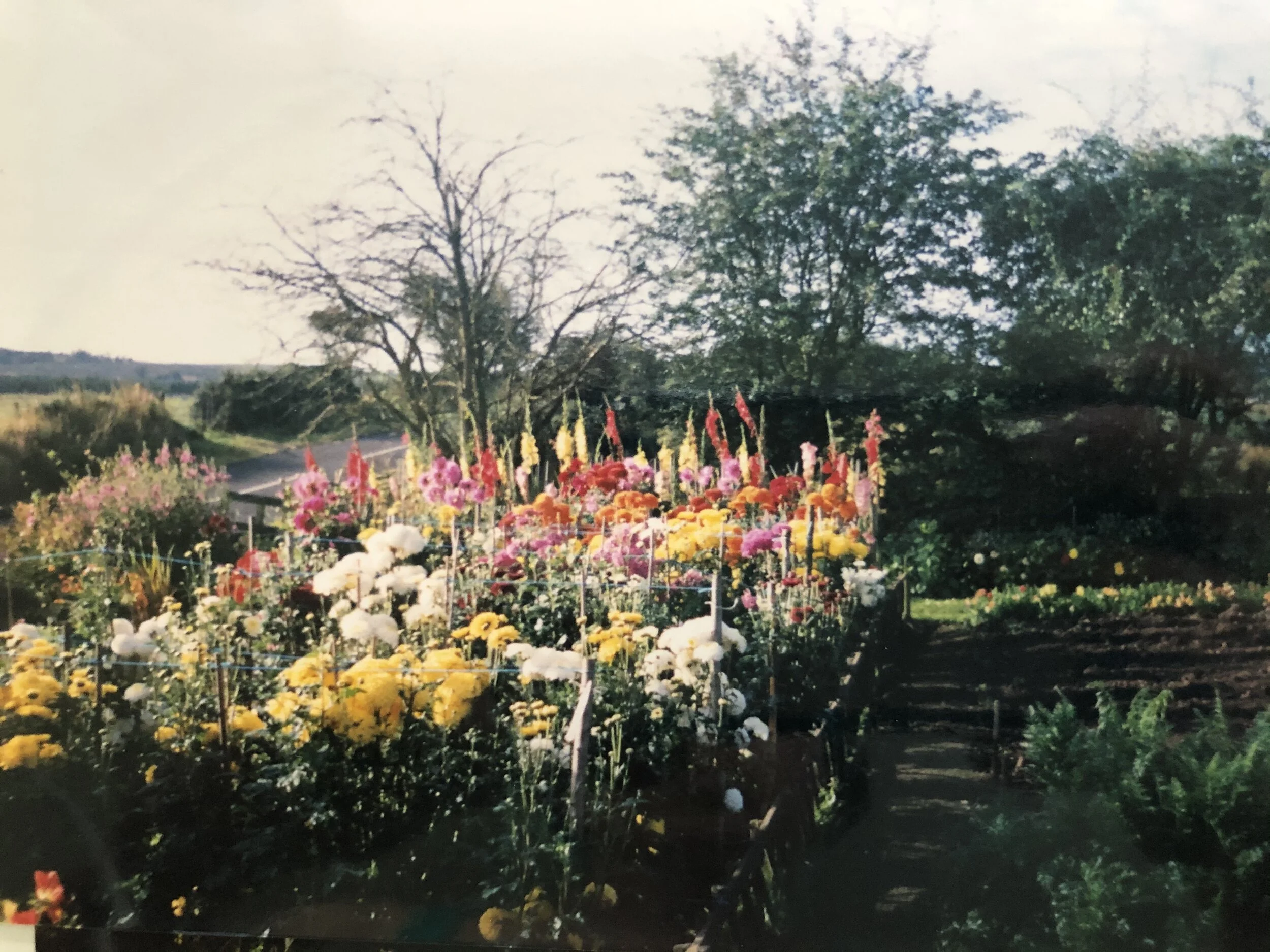
Back in the ‘90s - look at those blooms when there aren’t even leaves on the tree!!!!
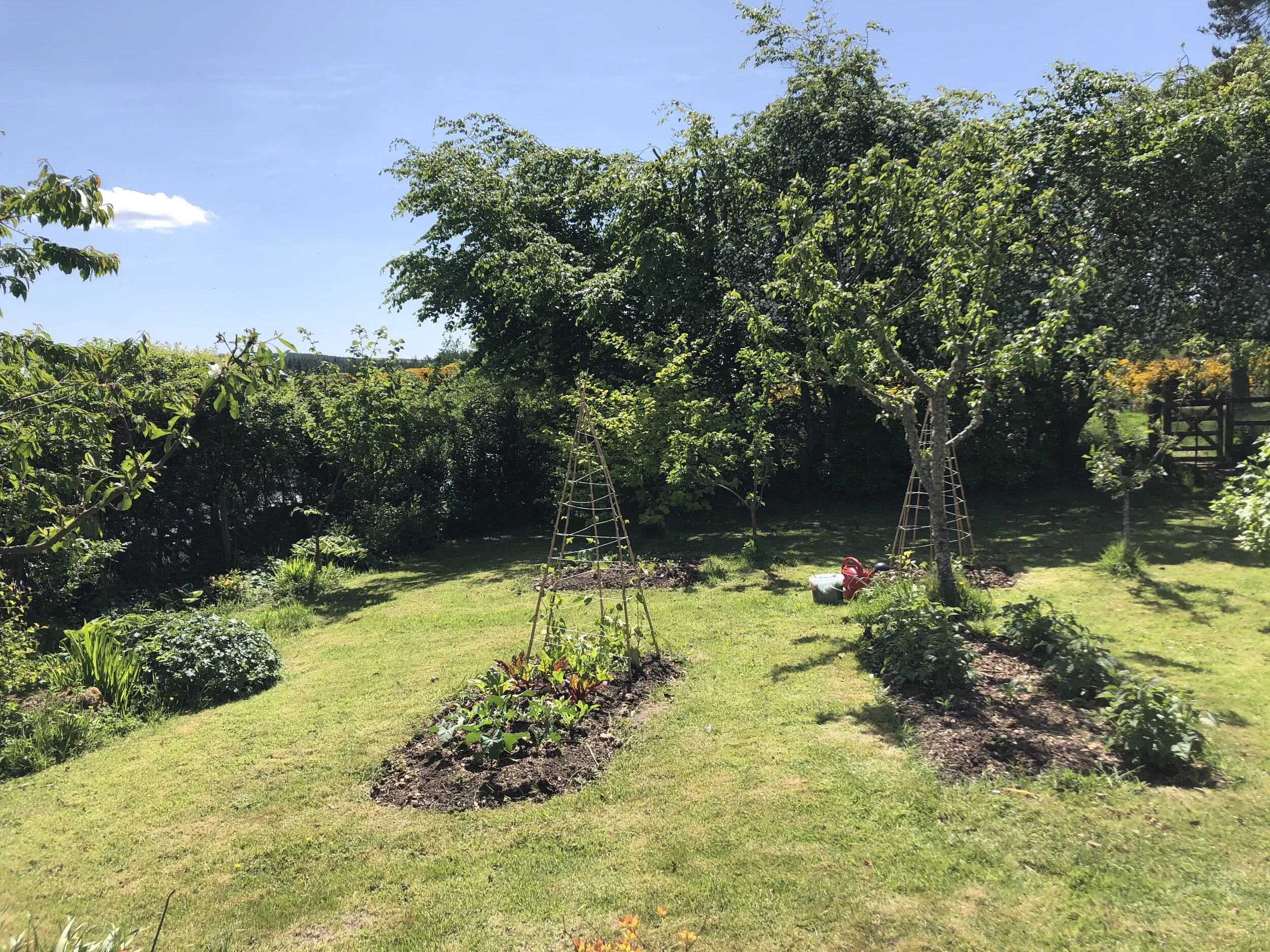
Nowadays….
Covid-rage
Our roof was being fixed this week which is luckily a job that allows for appropriate ‘social distancing’. Rather unsettling though was someone driving past and shouting ‘go home’ to the roofers. I suppose the irony was rather lost on whomever that was, that they were leaning out of a moving car in order to reprimand someone for not being at home. Meanwhile, south of the border, a war of finger wagging ensues around Mr Cummings’ behaviour. Clearly, tensions are running high in all directions thanks to Covid.
Gardens as Gateway Drugs to Nature
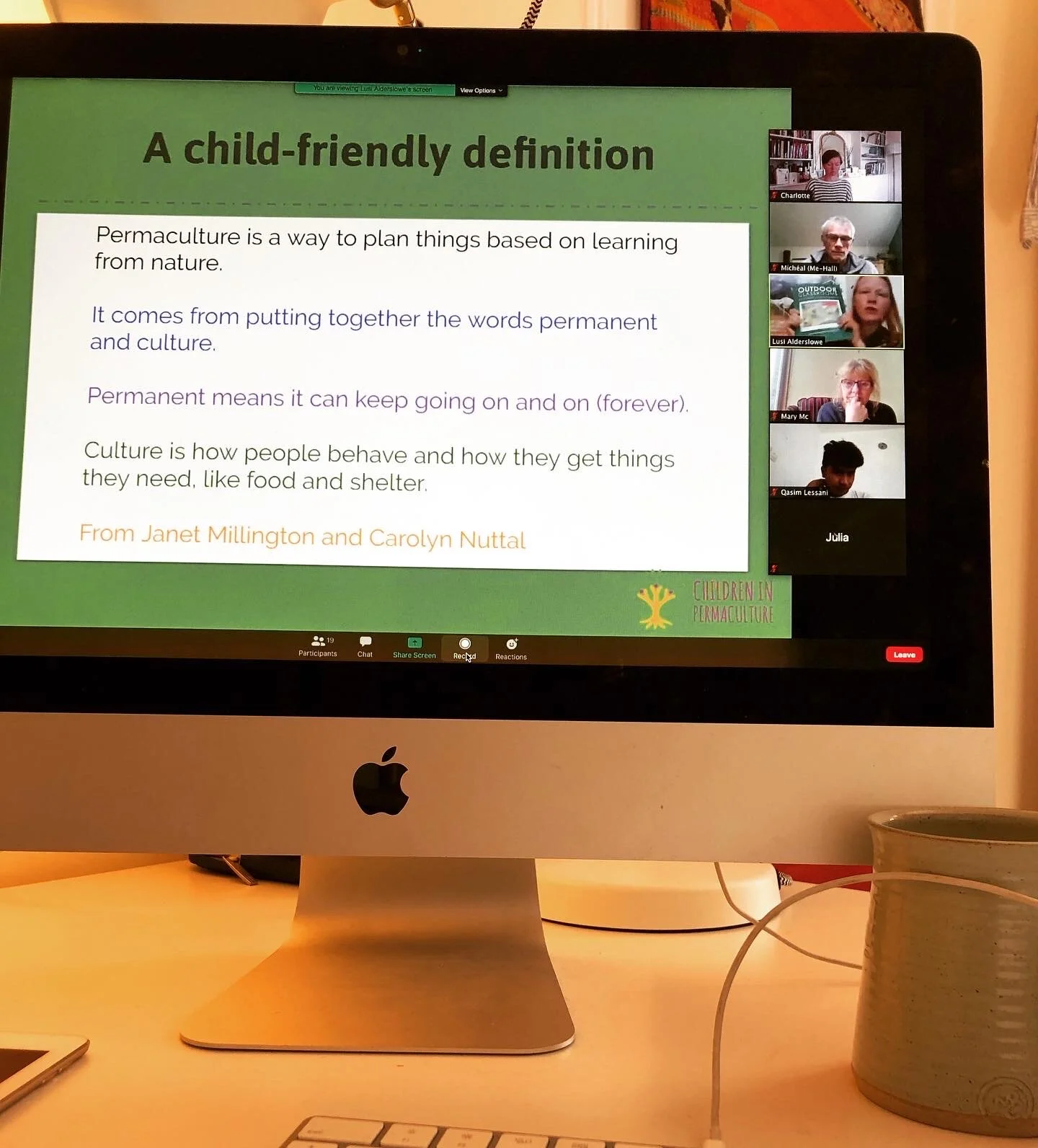
This week I also took part in the new national pastime of Zoom meetings. I’m about to start Forest School training (also due to be partly online) and thought I would compliment that with a Children in Permaculture (CiP) course run by my tutor Lusi Alderslowe.
I have to confess that I always find online meetings difficult, and having to concentrate on slow, often broken and distorted screen-activity for 4 hours was pretty tough. On the other hand, I had to marvel at the technology that allowed 20 people from different backgrounds and countries, with very different schedules and lives, to be able to come together and learn. We even had one participant from Kabul who brought very different perspective to the conversation.
The first focus of the CiP course was to explore concerns and claims that children are suffering from ‘nature deficit disorder’. Apparently most children now only spend about 20 minutes a day outdoors - something I cannot even fathom. This state of affairs has been conclusively linked with the rise in ADHD, depression and anxiety, and obesity. We feel this is the kids’ fault and resignedly conclude that they are just lazy, apathetic, computer addicted, self-absorbed materialists. But how could it be their fault when we (the adults in charge) provide them with addictive indoor distractions, restrict where they are allowed to roam and massively limit how they may interact with nature?
In 'Richard Louv’s ‘Last Child in the Woods’, he says it is actually the attitude of adults that prevents meaningful nature connection in children. I’d never thought about it before, but the adult line on nature and the outdoors is massively contradictory and hypocritical, and probably quite confusing for children. On one hand we say ‘nature is majestic, wonderful and beautiful and you should get out in it!’, but give them very limited means to do so. But we also say ‘nature is fragile, irrevocably polluted and doomed, and our interactions with it damage it further’. We also seem to believe that nature is comprised of poisonous plants, dangerous precipices and falling trees, and that child molesters and drug dealers are lurking around every corner. Then, to top it off, we build on, pollute and ‘develop’ wild spaces, reducing accessible natural space and clearly communicating that we value commerce over nature. As Louv says, children are not stupid. They hear what we are saying.
Understandably, ‘nature reconnection’ is receiving a lot of press and attention and documentaries like ‘Project Wild Thing’ show us trying to figure out how to un-make the complex social and physical environment we’ve created for future generations, that encourages them to stay indoors. It’s really tricky. This is vital stuff, but we run a significant risk of making this a middle class, elitist issue, much in the same way that a concern about diet generated the horrific ‘clean eating’ trend.
But the Children in Permaculture course was ultimately very hopeful. We had a beautiful presentation from a lady called Nim Robins, who showed us ways to create gorgeous, lush outdoor spaces for children - gardens, school ‘playgrounds’ and community spaces that allow them to explore, imagine, make and do on their own terms. Spending time in these gardens where there is no prescribed method of interaction but a lot of beauty, colour and encouragement to play as they want, is the gateway drug to being inquisitive and enthusiastic about natural spaces. We were also introduced to hundreds of activities you can do with kids outdoors that don’t require specialist equipment, and which are all fun and fascinating. This is the kind of ‘education’ I can get behind. By giving folk something beautiful to fall in love with and enjoy (or a delicious thing that brings them great pleasure), you also give them a reason to give a shit. Rather than telling kids what to do, or how to think and feel about a situation, let their own joy guide them. This generates enthusiasm, passion and curiosity in the most natural and sustainable way.
It also made me reflect that adults ALSO need wonderful outdoor spaces and good outdoors time. We need to be encouraged to play outdoors just as much as kids do, so we can be role models for the next generation. This made me think about my own garden and how it might nourish us beyond just providing vegetables and pretty flowers to look at…
Not really wild swimming