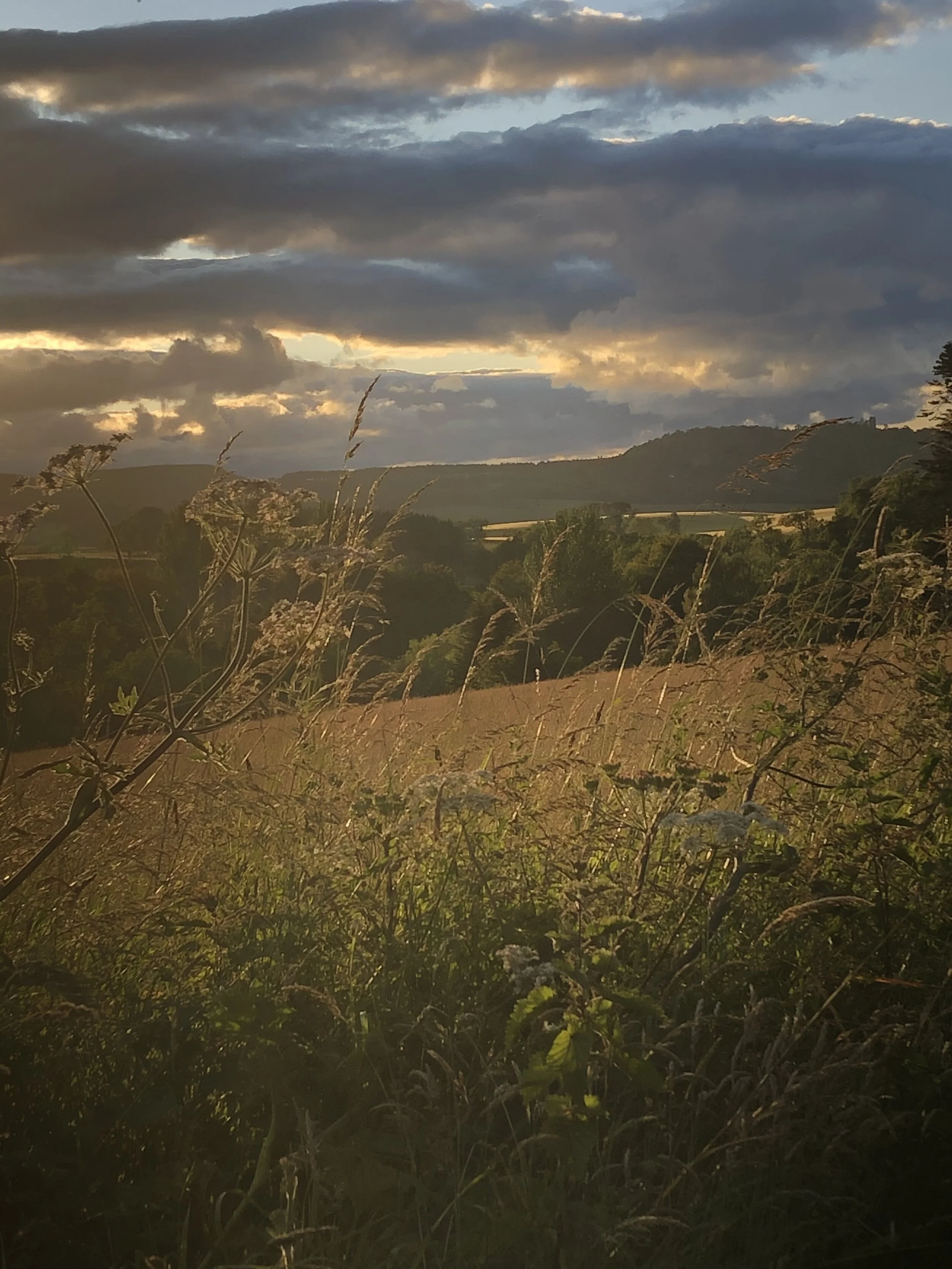
Tending to my brain-cells, pruning my thoughts: gardening and mental health (13 - 18 July)
The weather this week
Mixed, as seems to be the way at the moment. Was there ever a time in history when summer was reliably warm, sunny and dry in Scotland? I would imagine not, and yet one still lives in hope. And I love the eagerness with which Scots embrace any scrap of sunshine - sun hats, beers and blankets at the ready.
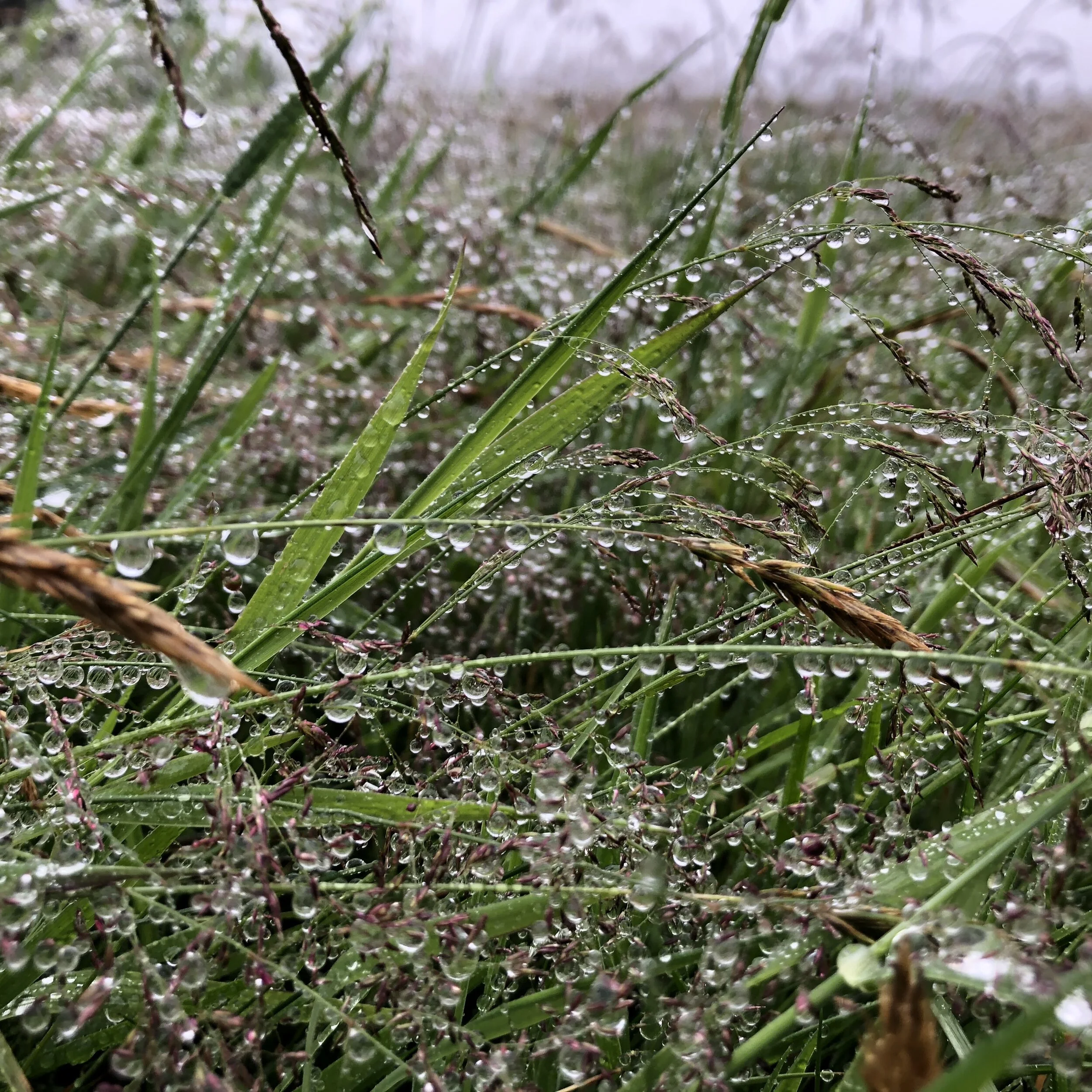
One morning as I pulled on my boots in preparation for Humphrey’s morning ‘visit’ to the paddock I noticed a gentle rain had come overnight and what looked like a heavy frost had formed on the long grasses. It was utterly breathtaking, although Humph, who is still rather close to the ground, was rather put out at having his warm belly soaked by the grass. Nevertheless I coaxed us both round the garden, mesmerised by tiny watery works of art. Rainy days also have their charm.
At home
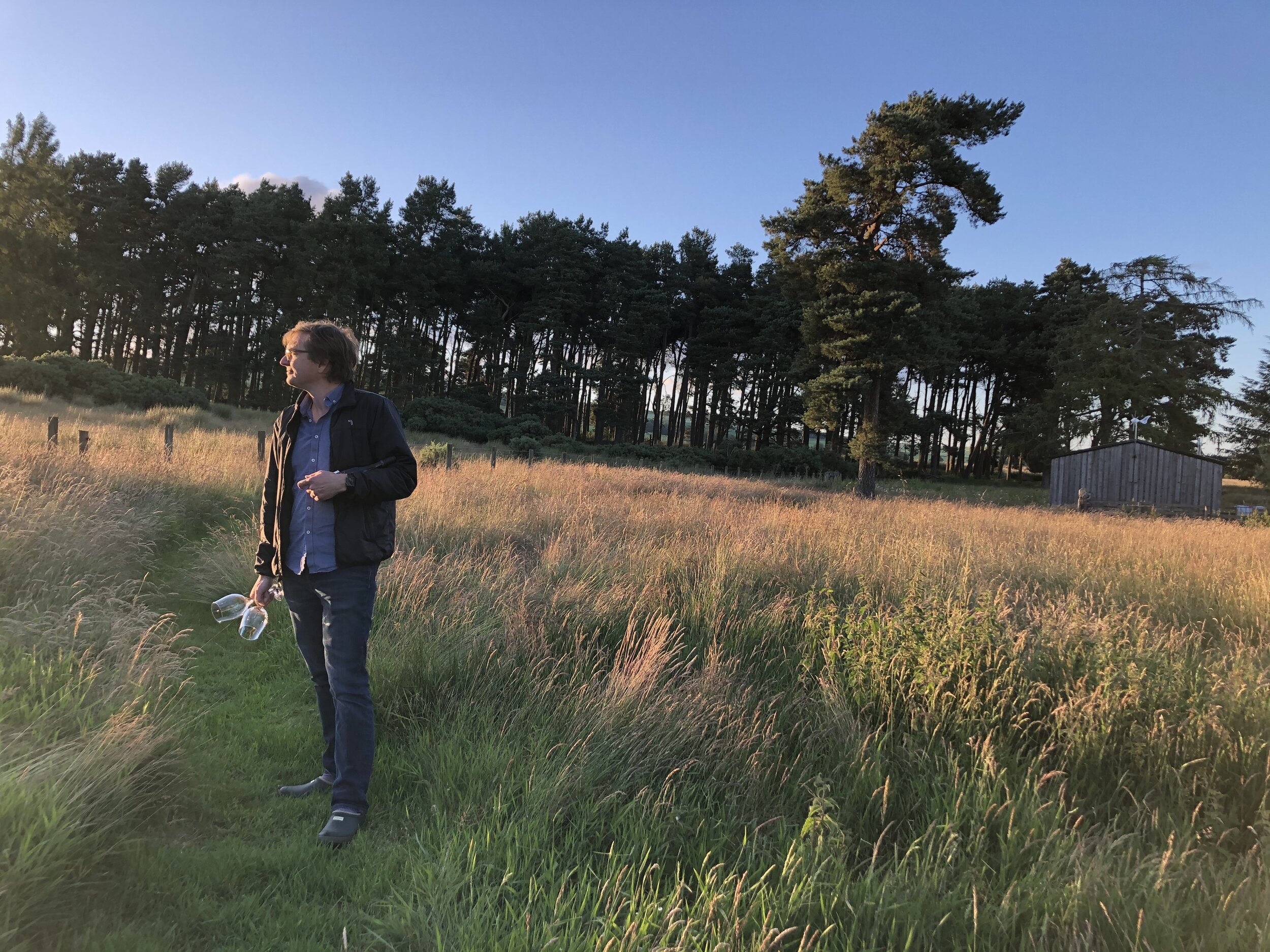
Preparing for our not-wedding dinner!
As it is still light at 10pm - another consolation for having to put up with Scottish ‘summers’ - we have had a couple of dinners outside and quite a few more in the polytunnel. Most notably, we had duck with blackcurrants, homegrown salad, and far too much wine, as a celebration of our non-wedding on Saturday. Jim and I were meant to be married this week, but Covid has scuppered that particular plan (many have come off much worse, so we don’t complain). We’re currently aiming for the end of August; a tiny outdoor wedding down by the river on the banks of which we got engaged. Personally, I’m pretty happy with the scale and lack of fuss that it will require. This time round, I’d quite like to just focus on the meaning of what we’re doing, and the beauty of the day.
In the garden
(drool)
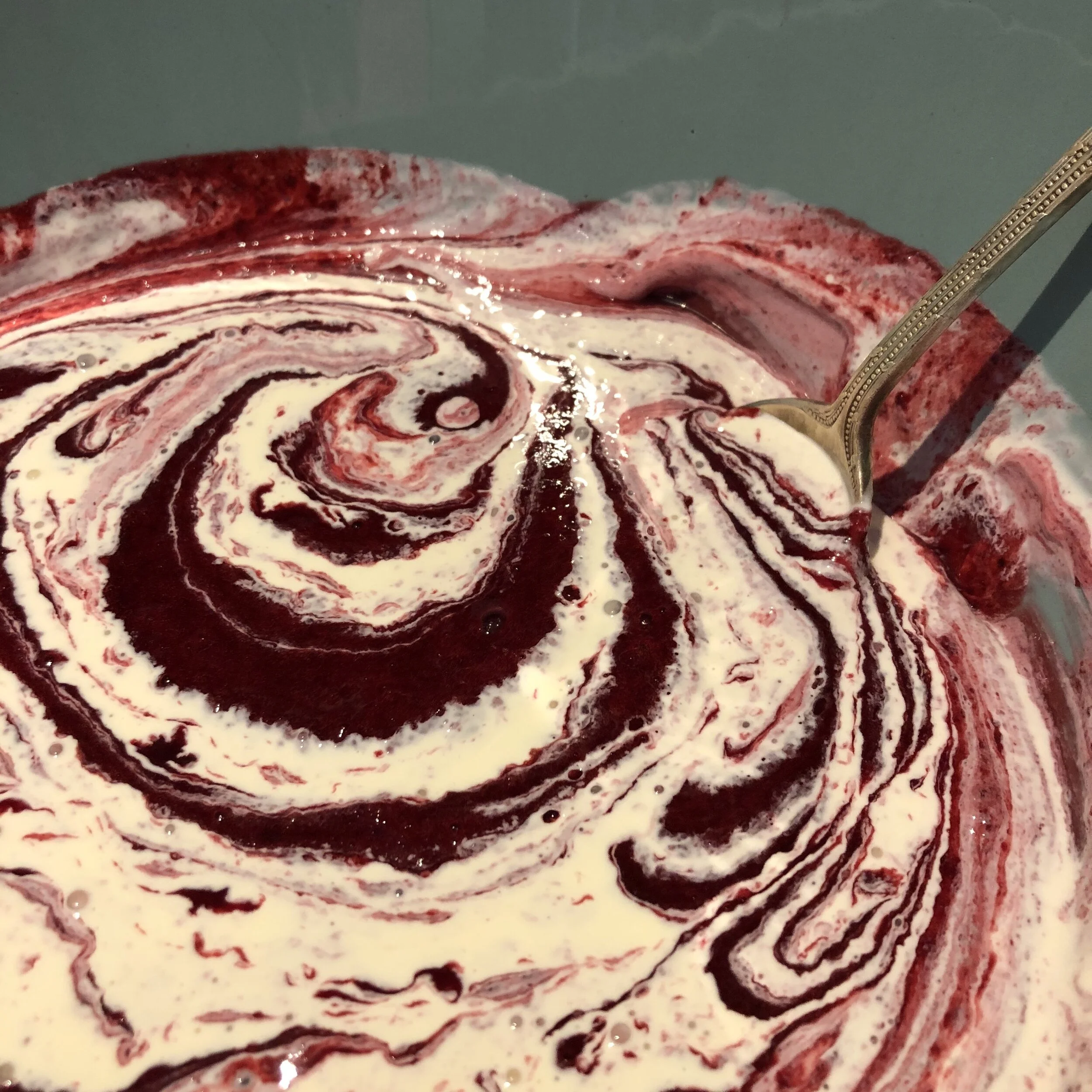
A friend of mine suggested a socially distanced meet-up at Border Berries this month, but as we seem to have the most prolific blackcurrant and gooseberry bushes in the South of Scotland, I had to decline. As I am not a jam-fan (no breakfast is complete without bitter marmalade or honey, but jam is confined to tea-time - an event we are rarely organised enough to execute before aperitivo comes around) I’ve been racking my brains and scant collection of recipe books for inspiration as to what do do with all this plump fruit. A rather zingy tart was made. We smothered some blackcurrants in cream. The birds ate all the redcurrants before I could harvest them (secret sigh of relief). But blackcurrant, of which we have bucketloads, is unashamedly punchy and either demands some processing or obscene amounts of cream. These days I’m not interested in preparations that involve every utensil in the kitchen, require hours at the stove or take several days to prepare; so syrups, jams and booze are out. Simplicity and deliciousness is all I require. And as so often appears to be the case, I found exactly what I needed In the darkest recesses of the barn; an ice-cream maker. A kind friend gave this to me back in the days when I didn’t own a freezer, but now I have freezer space AND all the fruit you could wish for. Happy times.
After 3 attempts, we have found that while any combination of blackcurrant, cream and sugar is delicious, the best approach is Italian - around 60% fruit to 40% cream. By the time we eventually marry, I will not be blamed for being twice the size I am now.
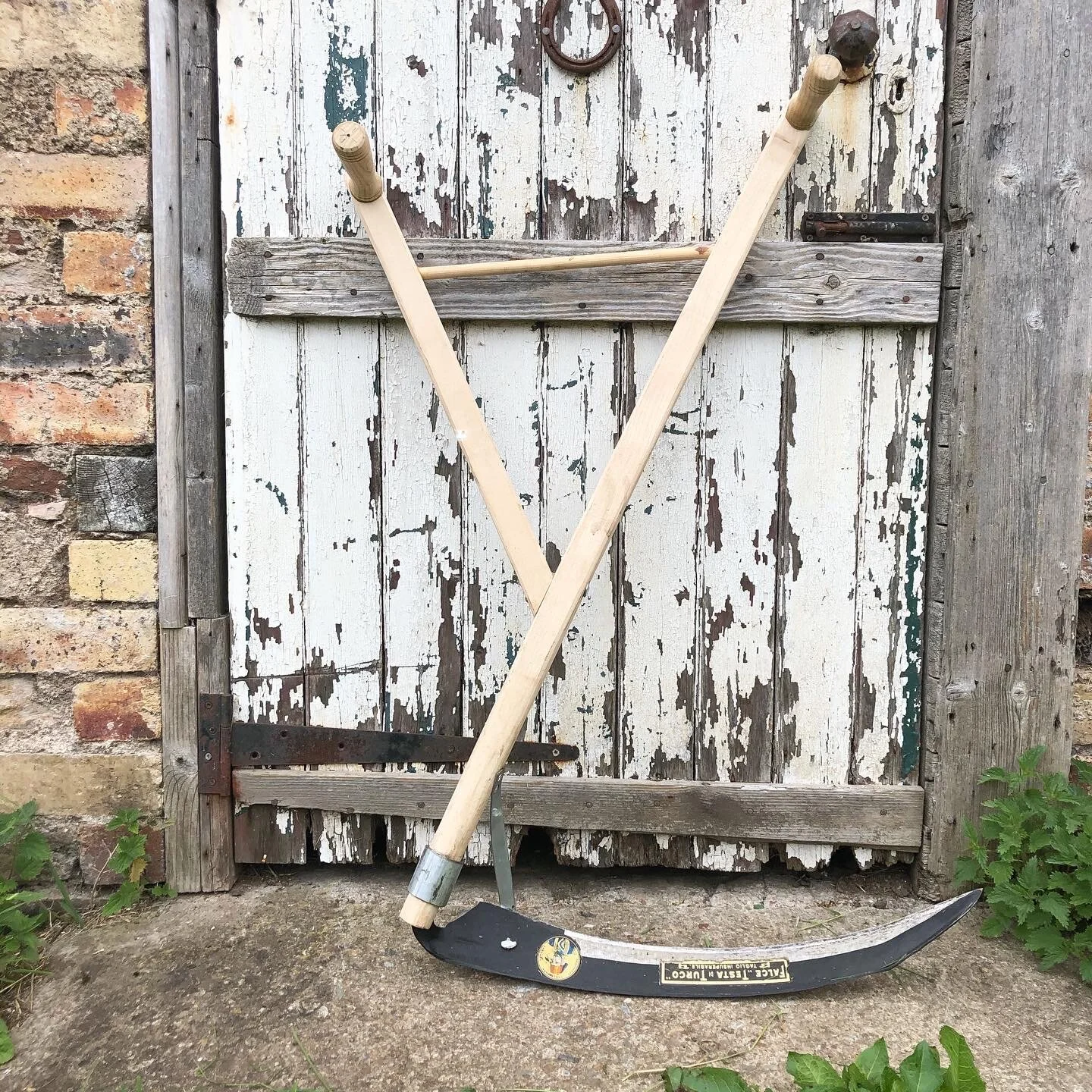
Old trusty - a handmade Northumbrian Scythe
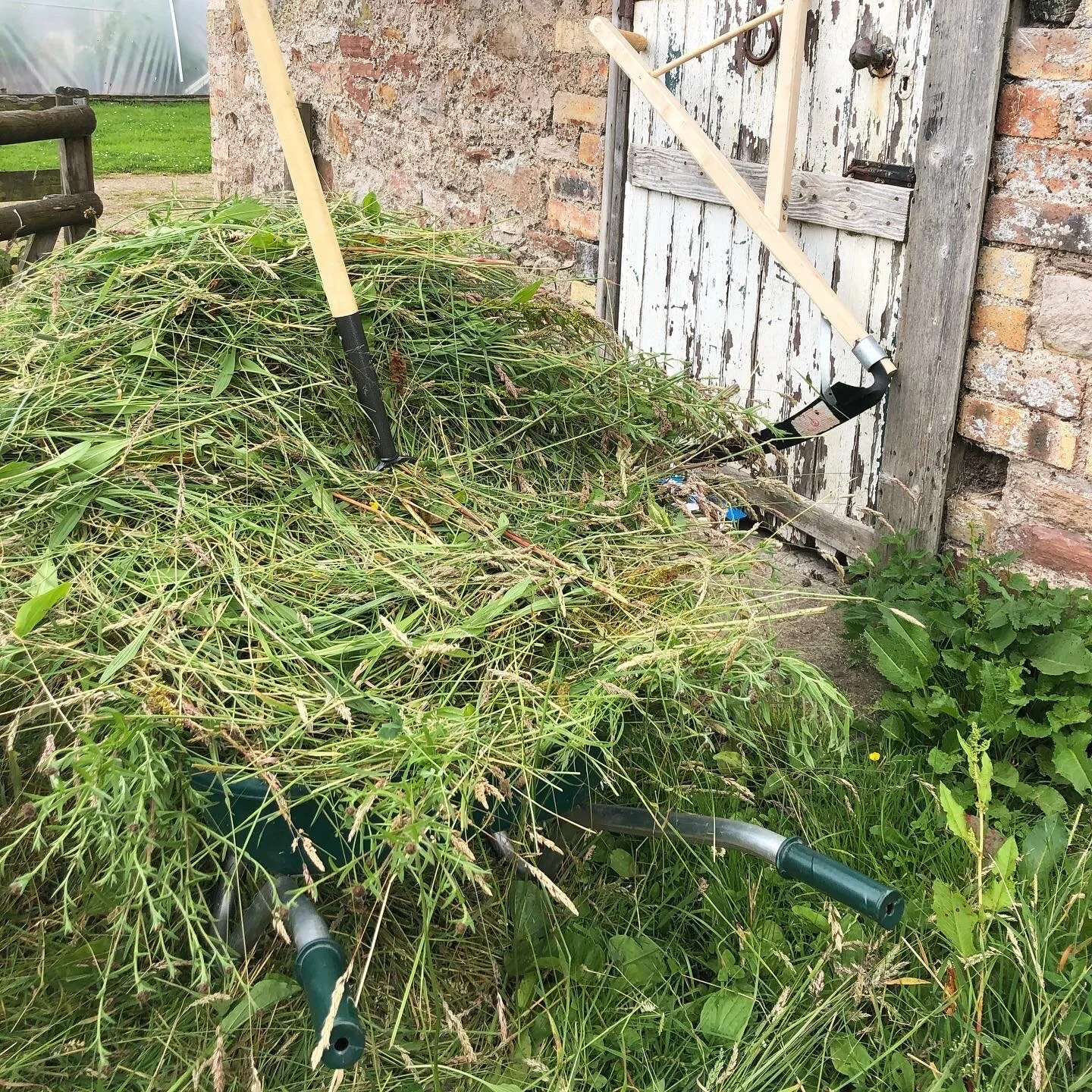
Huge amounts of organic matter!
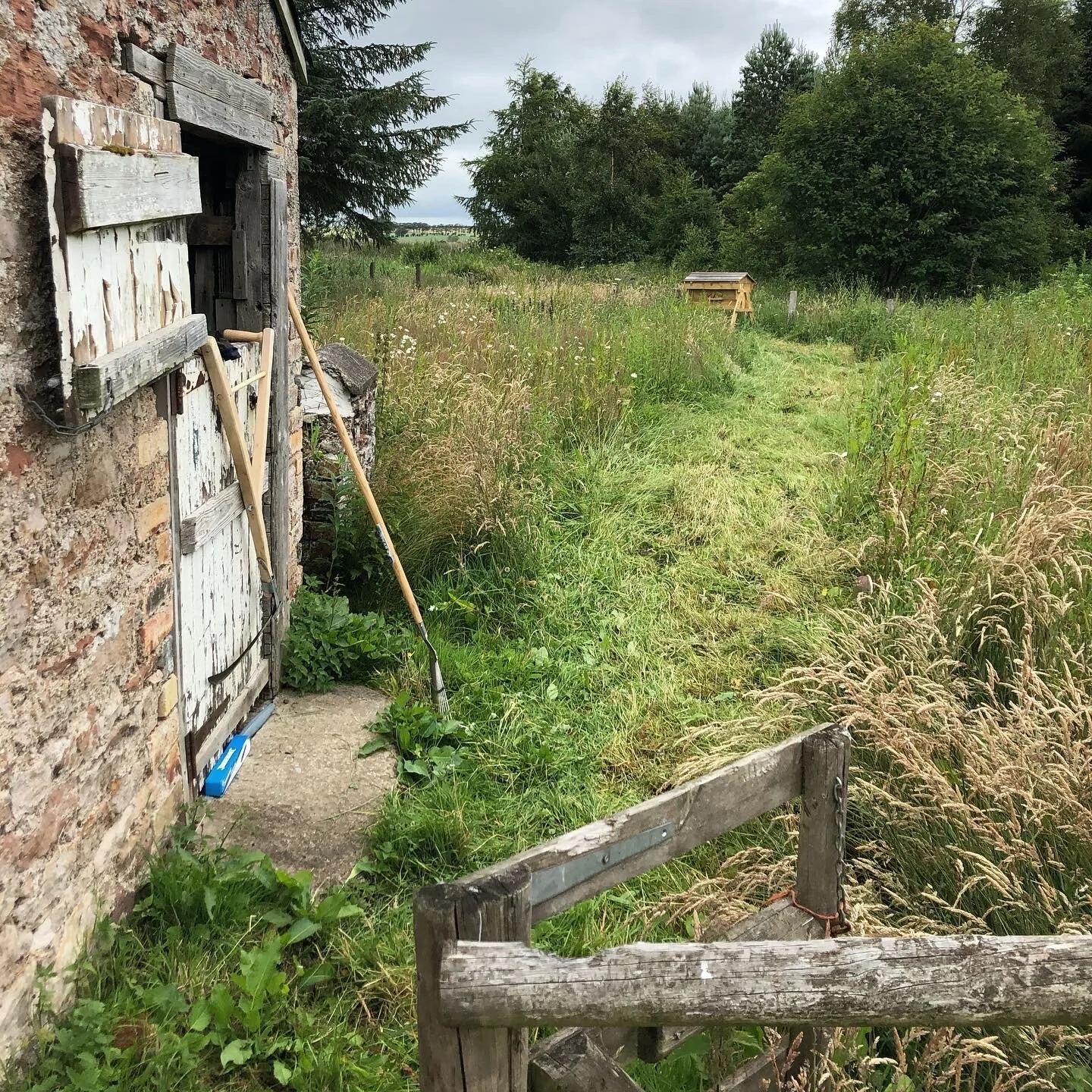
The tiny space I cleared after an hour.
On the few dry days this week, I grabbed my scythe and tried to relearn the skill I was shown on the John Seymour Self Sufficiency course last year. It is a lot harder than it looks (although most of the time, if you watched me scything you’d think it was a gargantuan struggle), but if the scythe is sharp and you’ve got your eye in, it’s really pretty straight forward. The most elusive part for a beginner is achieving a rhythm - something which tends to come after a few minutes once your eye has tuned into the shape, depth and density of the plant bases. The soft rasp as it cuts through stalks and grass is mesmerising and satisfying, and before you know it, you’re being followed by a neat row of short grass aside a long thin pile of cut hay. It is also strangely addictive to hear the wet, harsh sound of dock and knapweed being sliced to the ground.
Perhaps the best thing about scything is the sweat you work up, which justifies an enormously thirst quenching lunchtime beer.
Either the scything inspired me, or there was something afoot this week, but I found myself pruning and clearing a lot of undergrowth - tasks I normally associate with winter and spring. I had an urge to bring light and clear sight-lines to our property - what does this say about my current state of mind, I wonder? Or perhaps it’s just that our entire property was beginning to get dark with excessive foliage.
We also revived a decrepit looking hedge trimmer which turned out to be extremely effective at taming the wild growth as well as giving me a punishing arm and shoulder workout that I would have paid considerable sums for in Edinburgh. I also finally got around to rationalising the front garden which was mainly prompted by a number of disapproving glances from the postie. As a spot in the garden we almost never frequent, and which is generally just a verdant backdrop for any delivery made to our front door, it is hardly my priority. But I was surprised at how satisfying it was to hack almost a ton of vegetation from flower beds and hedges and see the pattern and shape of the plants there. I am sure a new year’s resolution will be to fashion that tulgy space into the sweet and welcoming cottage garden of my dreams.
Other thoughts
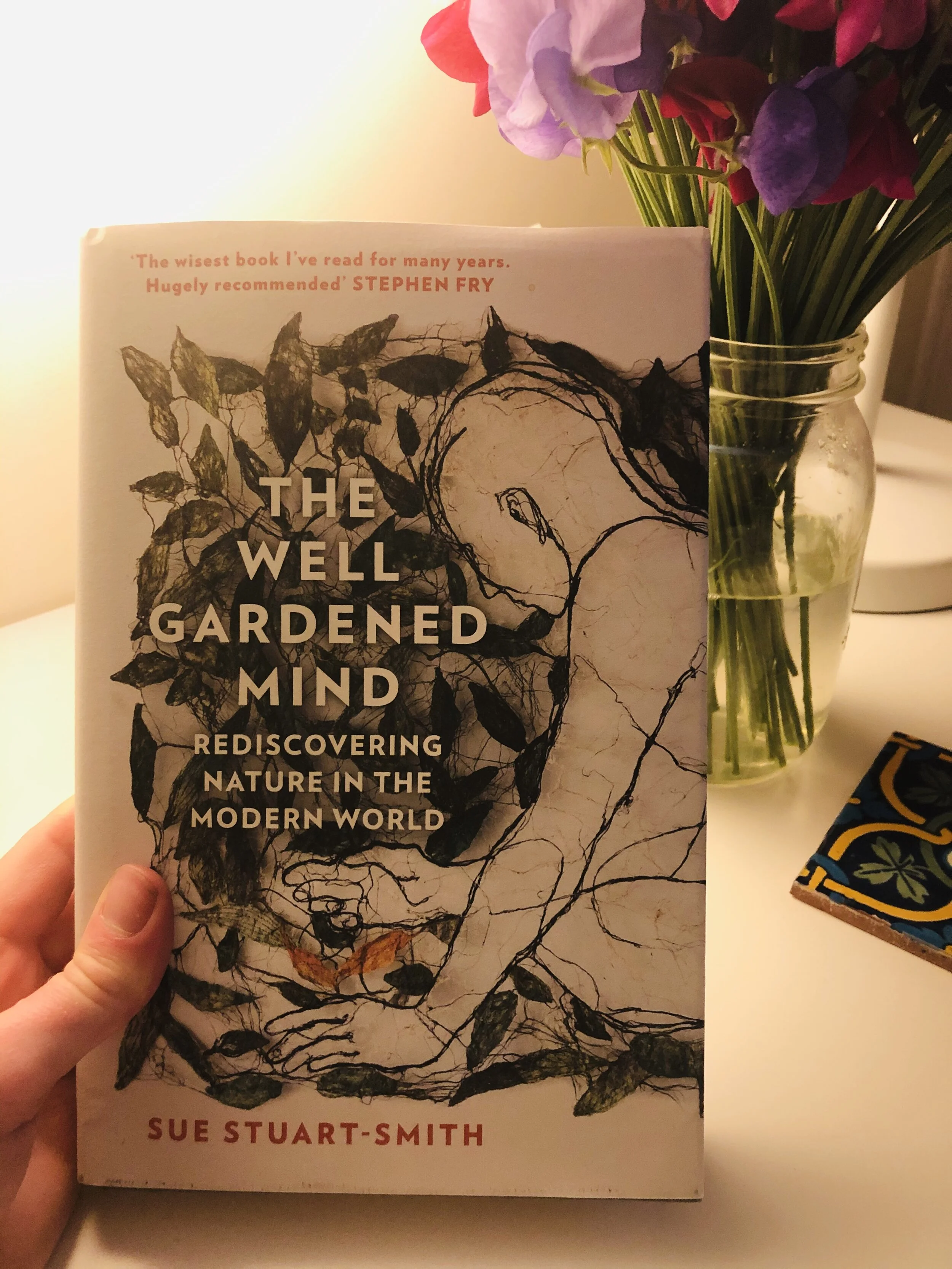
I’m currently reading ‘A Well Gardened Mind: rediscovering nature in the modern world’, by Sue Stuart-Smith.
This was partly inspired by the Forest and Outdoor Learning Award I’m doing, as addressing dwindling nature connection is at the core of much outdoor education in the UK.
The book explores the ways in which getting your hands dirty in a direct and meaningful way, can have immediate, tangible effects on your mental, spiritual and physical health. She describes soldiers in the trenches seeking solace amidst the horror by growing flowers. She documents community gardens where participants profess to having been saved by cultivating a love of plants. Prisoners having their perspective changed by petunias. She cites endless research that points to the danger in losing our direct connection with soil, natural rhythms, living creatures and plants.
This connection is perhaps something I have understood intuitively my whole life, but now I’m beginning to think about it more critically. Perhaps many of the issues I observed from studying food systems are in fact based in nature-disconnect. Afterall, if you neither interact with nor understand the value of the natural world, it is infinitely easier to exploit it whether directly as a producer or indirectly as a consumer. Reasons to be moved, fascinated and humbled by the natural world are freely available and limitless. But as Stuart-Smith points out, they are much slower and quieter forms of ‘entertainment’ or engagement and require some effort on our part. Nature is messy and does not come with instructions. It cannot compete with the instantly gratifying input available to us all, 24 hours a day, in the palm of our hands. Both contemporary media and natural stimulae can communicate and help us understand our self worth, but one is much subtler than the other. In a world that values speed, exponential growth and productivity, the purpose and value of spending time in nature is a hard sell.
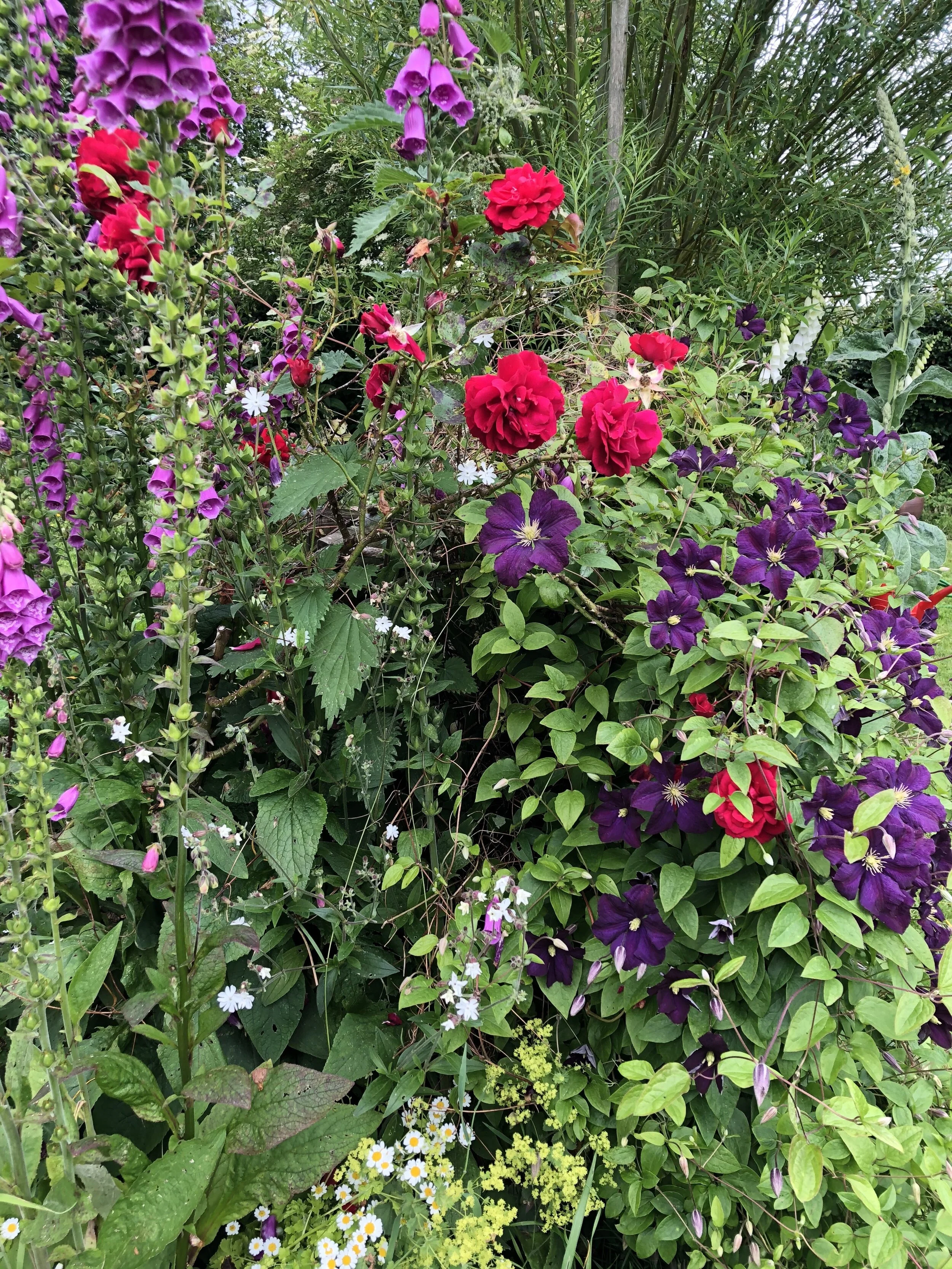
Beauty or Chaos? Or always both?
Anyway, while reading this book I’ve been cultivating a deeper gratitude for finally having my own garden space. I have also been more aware of how I use the garden to alter my mental and emotional state as well as the interrelation between the two. Being in the garden is a sure fire way to bring calm when I feel fraught, or to help remind me of what is precious when I forget. But the tasks I seek out or avoid are also indications of where I’m at. As I mentioned, this week I’ve been hugely drawn to clearing and rationalising what I perceive as chaos. Academically, I know that nature is not ‘chaotic’, but clearly I am seeking order from a situation I find overwhelming or threatening. This resonates with what I know of my current situation, and the awareness this reflection has brought is helpful. I can either try and tame the ‘chaos’ to make myself feel better, or spend time with it - resisting judgement (hugely difficult!!) until I can find a way to appreciate its beauty and value.
My intuition tells me that I will probably incorporate a little of both approaches and try to achieve balance within the tension between the two. Afterall, one thing nature can always teach us, is that there is no end point, but only moments in an eternal cycle, an ebb and flow of life, an infinity breathing in and out.