
8th - 18th August: New perspectives on ‘Rural’
After nearly 1100 miles of unfamiliar English verges, landmarks and place names, the soft curves of the Cheviots came into view and signalled home.
The sweet flush of recognition was followed by a feeling of relief and, as we crossed the Border, quite a few tears. It had been a long journey made longer by sorrowful news that reached us while we were on the road. England felt doubly alien in the disorienting aftereffects and I was desperately in need of steady ground.
But travel had performed its standard trick, convincing me that home had altered in our absence; everything felt strange. But after a few hours of reacquainting myself with our belongings, walls and plants, I finally registered that everything was as we left it; only I had changed.
After two years at home throughout the pandemic, driving around England to visit family had been overwhelming: experiencing distance once again, being immersed in such a concentration of people, of buildings and businesses, of sounds, signposts, fences and trees. It was both stimulating and itchily claustrophobic. No inch of land seemed unused or without delineation. As we returned to the North the canvas of the landscape was pulled and stretched away from us, putting ever greater distance between houses, trees and hills, until once again there were distant views and no competition for air.
Peace, tranquility and space are attributes we expect from the countryside, but the contrast of the rural south made me wonder where the line is between ‘unspoilt’ countryside, and barren, neglected or - as a friend from the south had once deemed the Scottish Borders - ‘denuded’ landscape. Where we live is undoubtedly peaceful; it’s still common to meet no-one on a dog walk, housing is (just about) still affordable, events are rarely sold out or restaurants booked up, there is always a free parking space. But how healthy, viable or ethical is all this space?
Many current commentators voice concern on the sustainability of country living and the resilience of the rural environment we admire:
Is the cultivated landscape of fields and hedgerows productive farmland or environmental mismanagement? Some believe we should rewild our countryside and grow our plant based diet in high rise blocks in cities.
Is it ethical or sustainable for so many people to live outside compact, resource-dense urban environments?
After enjoying a thriving, diverse, and vastly different rural community in the south, I came home wondering if where we live is idyllic or unrealistic?
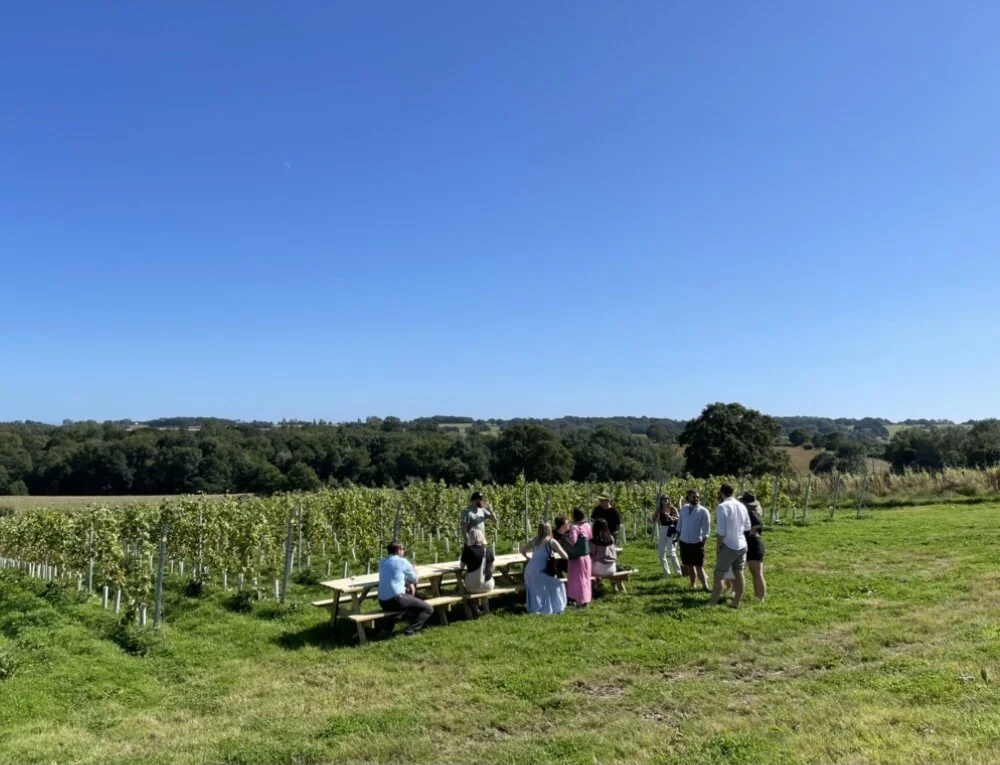
Tillingham Natural Winery: Out standing in their field (vineyard).
The laziest of my preconceptions sees unspoilt rolling hills north of the border, and the South as an unanimously polluted, protracted extension of London. I was relived to have this idea shattered by driving the defiantly narrow lanes of rural Kent, spying glowworms in the grass, finding village churches unlocked and tiny pubs welcoming. It was certainly countryside, and yet this was a version of rural life unknown to me. There seemed to be entrepreneurs around every corner offering local food, stunning accommodation, unique crafts and innovative experiences. And they were busy, expanding, confident and successful. The enthusiasm we met was energising and - I am sad to say - not something I have encountered very often in rural Scotland.
![WaterLane Walled Garden [Waterlane.net]](https://images.squarespace-cdn.com/content/v1/5a53e40d64b05f251e1eb9bc/1630426678374-ANPMAROJ94IHBZITWFU9/IMG_9502.jpg)
WaterLane Walled Garden [Waterlane.net]
We visited organic wineries, one employing regenerational agriculture and making natural wine in Georgian qveveri. They had sold out of their first vintage in a day. Several miles from any sizeable town, we ate in a busy walled garden that was being beautifully restored by trendy twenty-somethings to host events, a cut-flower business and restaurant. They had settled into a steady income in their first year. I tried to imagine such happenings in the Scottish Borders and wondered, doubtfully, whether or not we have the population density, the diffuse wealth, or the climate to sustain such ventures.
![“What happiness you and I have derived from that garden [Sissinghurst] - I mean real deep satisfaction and a feeling of success. It is an achievement - assuredly it is. And it is pleasant to feel that we have created a work of art…” - Harold to Vita, 1955](https://images.squarespace-cdn.com/content/v1/5a53e40d64b05f251e1eb9bc/1630426658605-K73C4WGQF8VBKSU9EGC0/IMG_9501.jpg)
“What happiness you and I have derived from that garden [Sissinghurst] - I mean real deep satisfaction and a feeling of success. It is an achievement - assuredly it is. And it is pleasant to feel that we have created a work of art…” - Harold to Vita, 1955
But I found inspiration in two historic houses that we visited (yes, we are middle aged now); Sissinghurt, home of Vita Sackville-West, and Smallhythe, owned by the 19th century actress Ellen Terry. These extraordinary women had fallen in love with rural havens, but knew the necessity in bringing the world to them. Their homes were also unconventional centres for the arts and have world class gardens that continue to draw crowds. The barn at Smallhythe - converted by Ellen Terry’s daughter - continues to host top quality theatre (when Covid isn’t causing havoc), despite not being in a town.
Rather than serve as an impenetrable hideaway for the few willing to brave weather and mud, I feel the viability and sustainability of our countryside lies in its ability to engage and support creativity. Rather than funnel our populations into ever more urban spaces, or allowing urban space to expand unchecked across green spaces, why not reimagine the countryside as a space that can thrive and buzz. Personally I don’t see this as being at odds with supporting a healthy environment or respecting nature. Far from it. This is not just a call for more housing, roads and infrastructure, but for the cultivation of a ground rich enough to support innovation and diversity in our rural spaces. Surely if more of us had meaningful ways in which to spend time in and engage with the countryside and our natural world, there would be better understanding of why we need to prioritise its care.
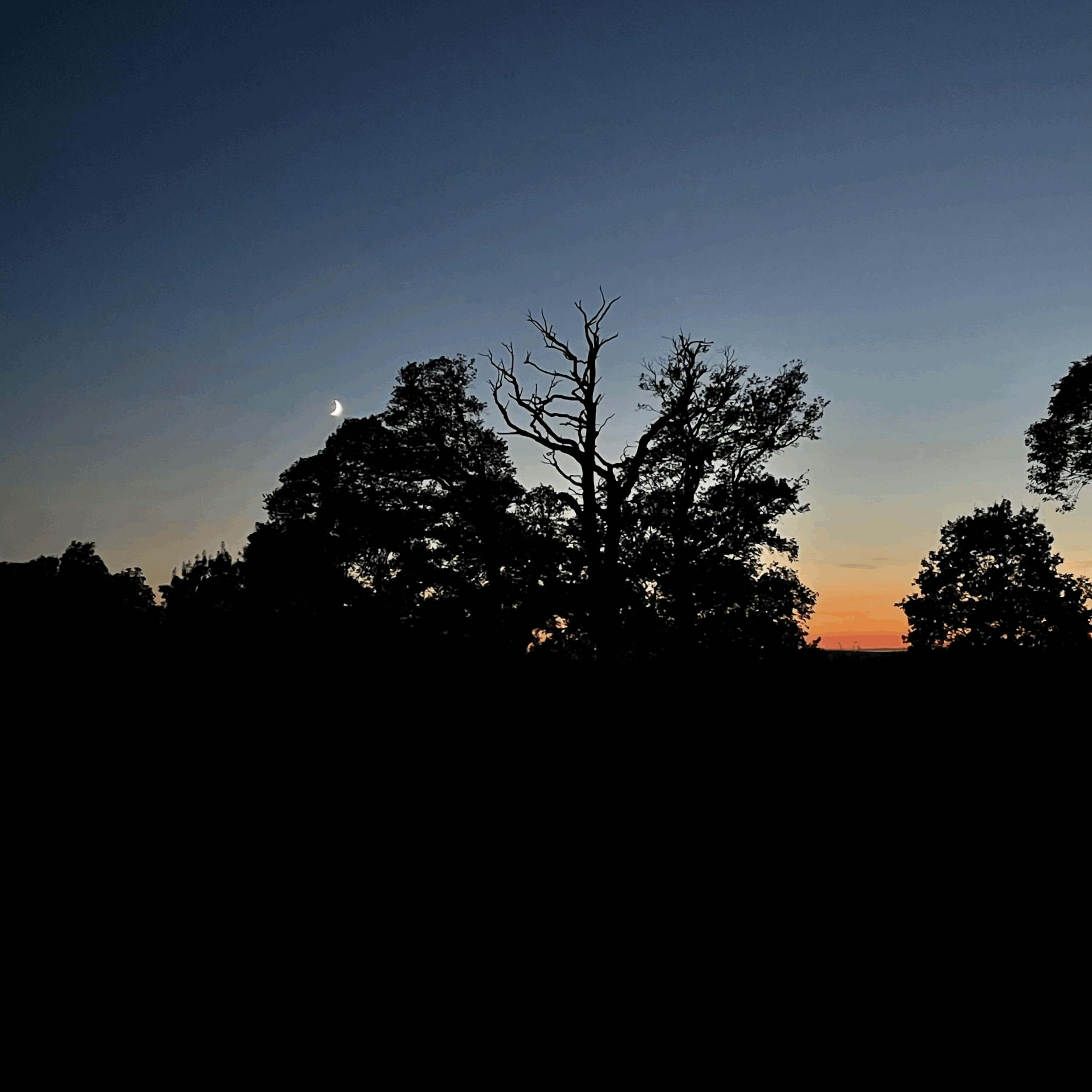
The crescent moon over the Kentish countryside - the perfect conditions to spy glow-worms!