
30th August - 5th September: Autumnal Gratitude
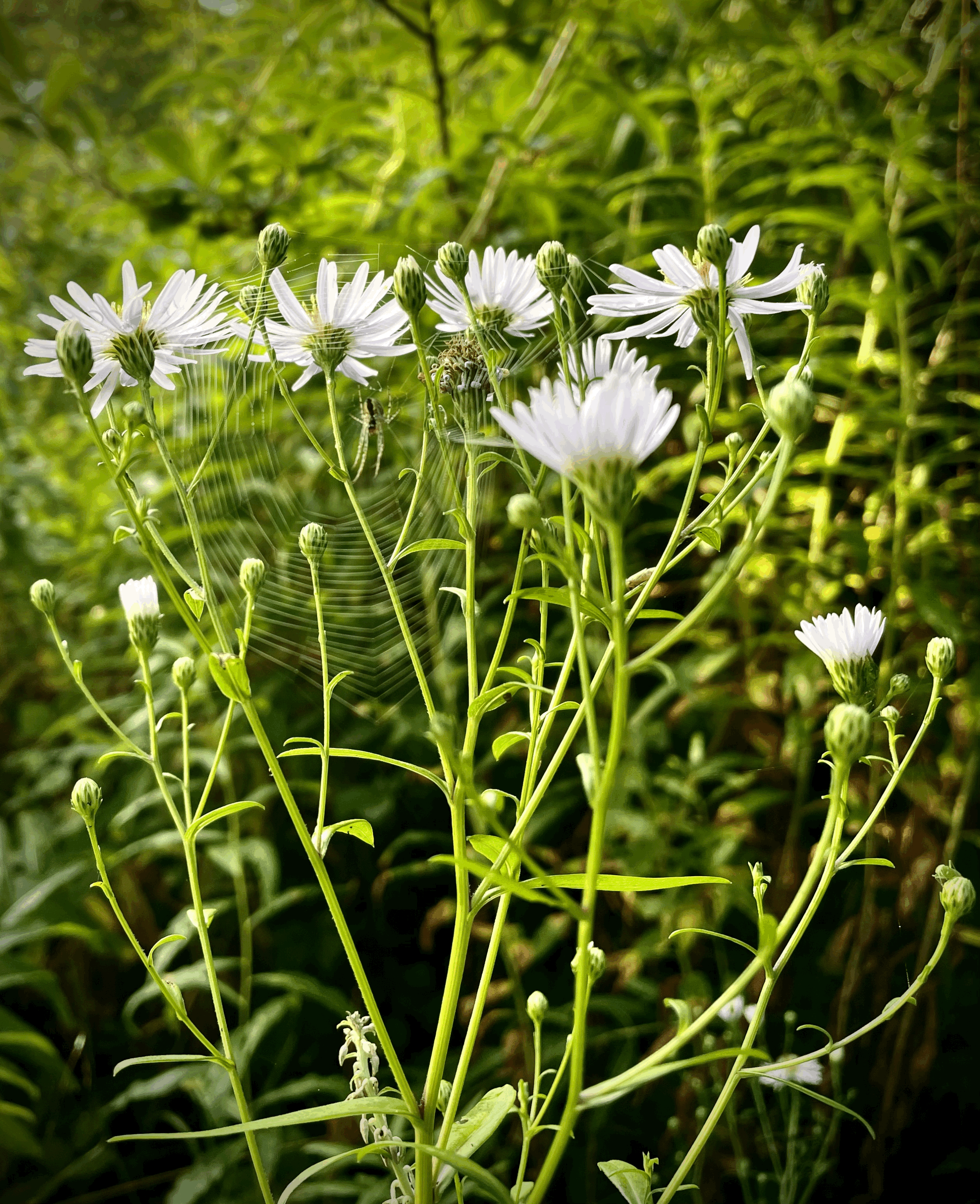
The other day I drove through a shower of golden lime leaves on the way into Jedburgh and felt like I was part of an autumnal parade. As the new season gets underway I feel myself letting go of my own leaves; all those expectations for the year that formed buds and grew, but were never realised. Autumn is a time for slowing and reflecting, and always feels like a relief to me.
The rhythm of our garden wildlife has shifted in the opposite direction. The hedges and dry undergrowth rustle loudly as birds and rodents search for food and I’ve noticed new interest in our empty bird feeders. While I slow and retreat inwards, they must search and store, exert effort for the coming winter. I even caught our red squirrel hanging off the bird feeder one morning. There should be plenty of food at the moment as rowan, blackberry and hazel are festooned with fruit this year. But perhaps they know something we don’t. An old wives tales says that bushes thick with berries signify a harsh winter. I will have to start filling the feeders again to make sure they have nutrient rich food available.
As well as the exciting red squirrel sighting, our animal community has been active this week. The moles have returned from wherever they went to, and I’ve seen a lot more of Mr Stoat. The damage to the veg garden mulch has reached critical levels with huge docks now a prominent feature in what was a satisfyingly neat area - a rarity on our property. Somehow I haven’t gotten round to removing them even though it would be easy with Jim’s impressive dock-removal tool. Perhaps it is the feeling of autumn that makes me lazy - a winding down, a return to the earth.
This week I feel a bit overwhelmed by all the things I need to do in the garden, and so I haven’t done any of them. It could be pleasant to sit amidst the overgrown beds and residue of summer growth and know that no-one will judge me for this mess of my own creation. After all, it’s my space and doesn’t need to be anything for anyone other than me, Humphrey and our growing menagerie of wild creatures. And yet I feel restless and compelled to compare what I see with what I imagine to be the case in other people’s gardens. Here, the lawn is swiftly becoming a meadow. The ‘wildflower meadow’ looks like a wasteland of overspent weeds. Our stable continues to fall down gracefully (I still haven’t found a builder brave enough to take it on), and all my well intentioned tomatoes flop about in a sickly manner, remaining stubbornly green. The impressive cloud of nasturtiums covering our new fence has been reduced to a bedraggled mesh by a plague of cabbage white caterpillars. All my perennials have donned a brown autumn garb and are lying down, waiting to be snipped into a slumber for next year. The sweet peas and climbing roses, however, remain a joy - running riot, spouting obscenely bright flowers in defiance of the drab surroundings. I focus on their untrained and informal blooms as I drink my morning tea, and try not to think about the rest.
When I volunteered for an educational garden in Seattle, I remember being told that a garden should work for you, not the other way around. I try to remember this when I feel that panicky overwhelm creep into my belly at the sight of something like the waist high grass around my new trees. There is a perpetually long list of ‘shoulds’ associated with looking after land of any size. Some tasks become arduous ‘musts’ the longer they are left undone, and suddenly it is hard to walk through he garden without feeling guilty.
Our scruffy acre up on this moor contains some corners where beautiful blooms and food can be cultivated, and others that remain stubbornly rough with brambles and knapweed no matter how much sweat and swearing occurs at the other end of the scythe. I become frustrated easily, and know it would help to accept that a garden is probably never ‘finished’. The long and winding transition towards realising a gardener’s ideal surely has to be enjoyed for itself otherwise our gardens would go unappreciated. But I notice my own impatience and the difficulty in enjoying the process. There is also the dangerously seductive ease with which we can gain a peek into the lives and gardens of others via social media. Browsing the cleverly edited lives of Instagrammers only serves to exacerbate an insistent self-criticism, and yet I can’t help but look. I kid myself with the story that I’m getting tips and ideas for our house and garden, but really I think the only thing I gain is a sickening urge to shop online until my life looks like theirs.
But I am grateful for autumn in the face of this middle-class angst!! Something about this time of year provides space to step back and ask; whom do I feel will judge my progress or my failures? Instagram and its beguiling siblings encourage us to work for more likes without asking; to what end? And I feel something of that competitiveness has sown seeds in our wider culture. Within myself and among those I know and love, I sense a pervasive pressure to prove the value of our lives through symbols (often as images) of our achievements; be that our garden, our outfits, our job, or the food we’re eating.
Perhaps finding joy in an imperfect life is not lack of ambition, but a triumph over the insidious myth of picture perfect lifestyle. I need to breathe that in and see my garden - with its unfinished compost-bay-building-project and giant pile of garden waste which has now become a feature - as something to love and find fascination with, rather than a symbol of failure.
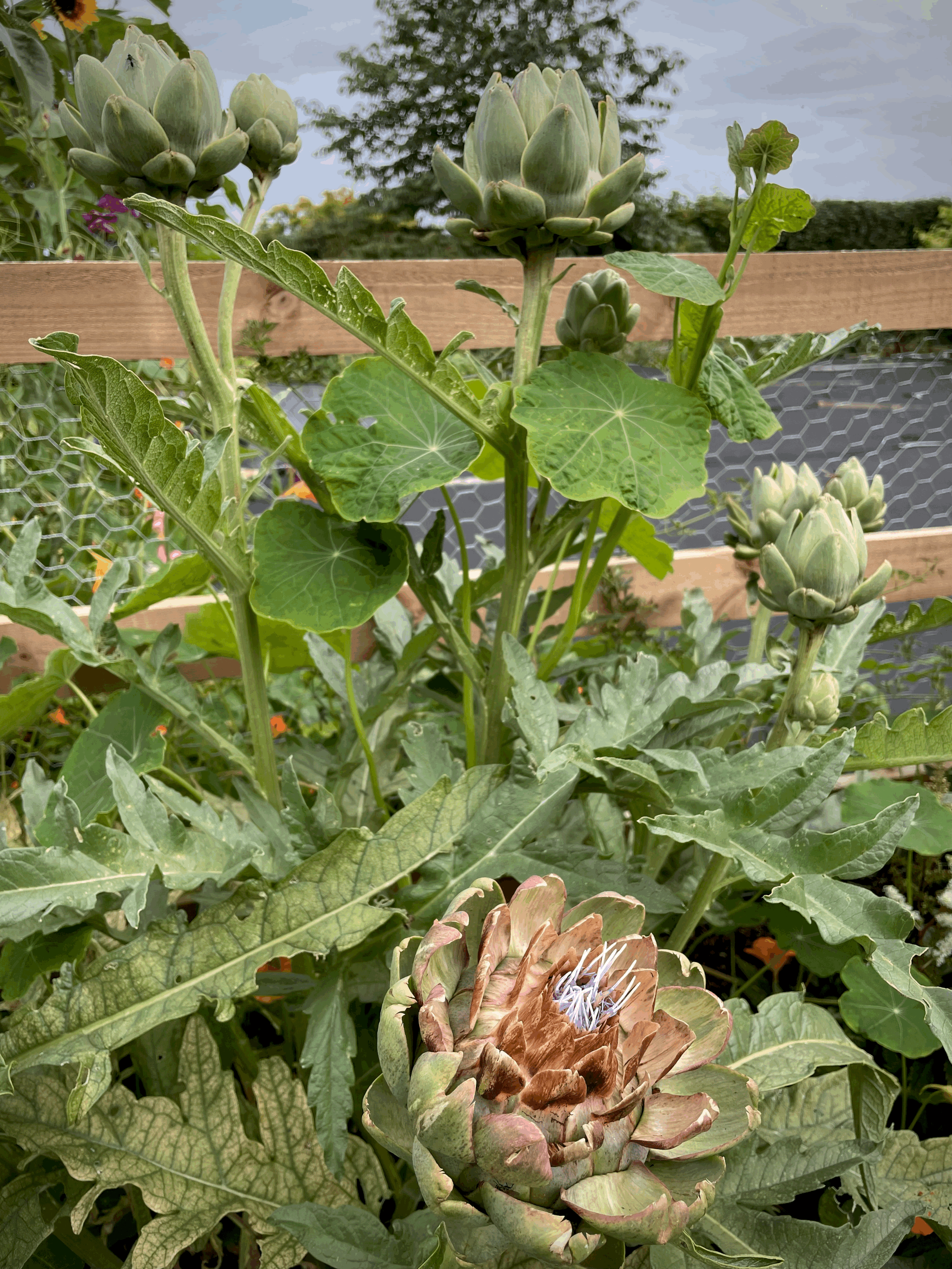
Artichokes I didn’t harvest bring otherworldly beauty to the garden and will be loved by pollinators