Plunging back in (12-18 August, 2021)
This week, after a lengthy hiatus of a year and a half, I found myself back at work with Food Connects. Not a soft re-launch, but a full immersion into unfamiliar waters. You wild swimmers may understand the value of a short, sharp, shock, but I err on the side of comfort and caution, and was decidedly nervous about jumping back in, particularly as my first foray involved working with those whom I believed to be the toughest of crowds; teenagers.
I’d been asked to take part in an experimental workshop co-created by Connecting Threads, Tweed Youth Action Group, and Transform Arts. The loose theme was ‘place making’, and the aim was to encourage young people to connect with their home in the Scottish Borders by developing their relationship to the natural world.
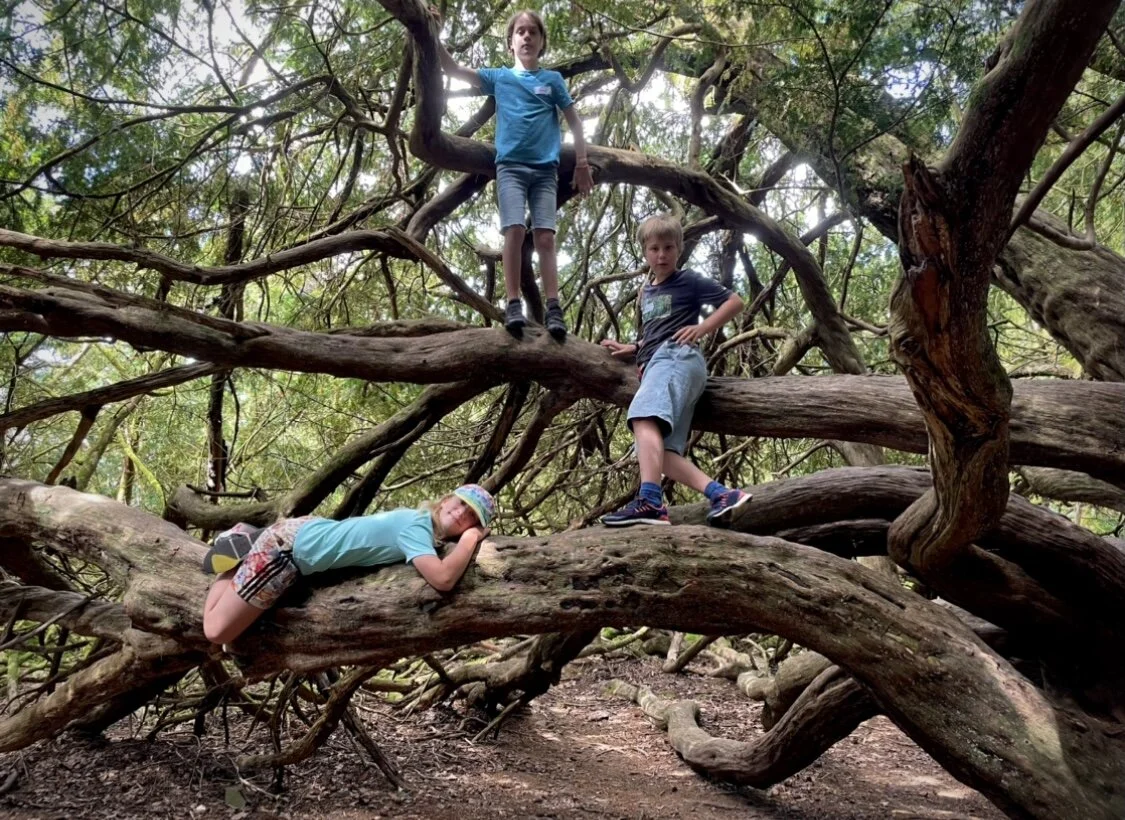
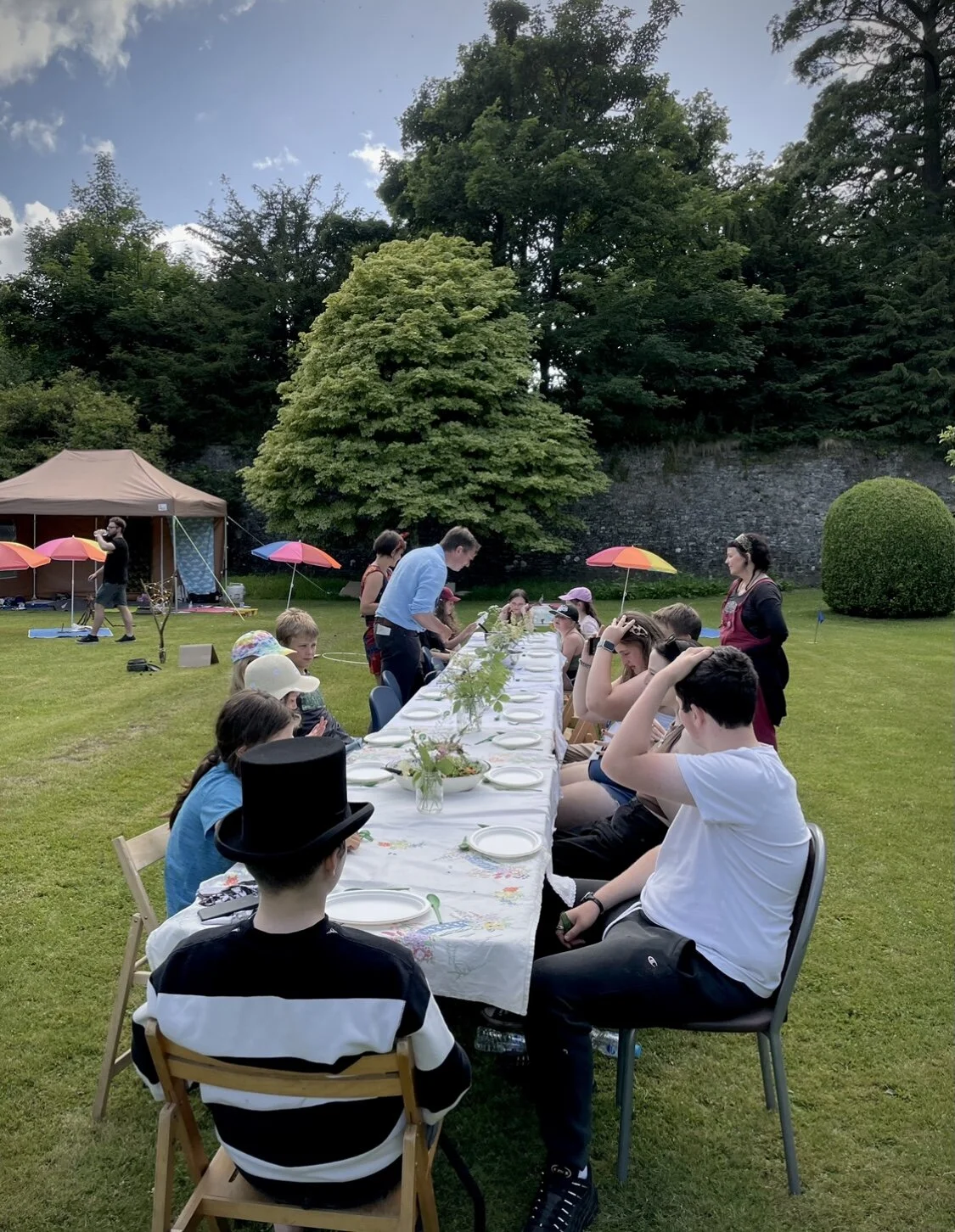
Across the varied and beautiful grounds of Traquair house we held different workshops involving craft making, imaginative play, foraging and bush-skills, then finally came together in the walled garden to eat a feast inspired by wild plants and animals of the region.
I was offering a guided tour back in time; considering how our ancestors might have perceived the world, experiencing some of their survival skills and tasting some of the wild foods they might have eaten. I love the challenge of helping others to transform what can seem like an anonymous mass of tangled green matter, into a map of stories, flavours and useful plants with which we have ancient, buried relationships. But July is a terrible month for foraging as we’ve already said goodbye to the leaves of spring, and are still awaiting the fruits, nuts and fungi of autumn. And I had no idea how a group of 11-16 year olds might react to a thoughtful stroll without the help of plentiful weird and wonderful flavours to keep them entertained.
I tried to channel my teenage self as I constructed the workshop. How would I have reacted? What would I have found interesting?
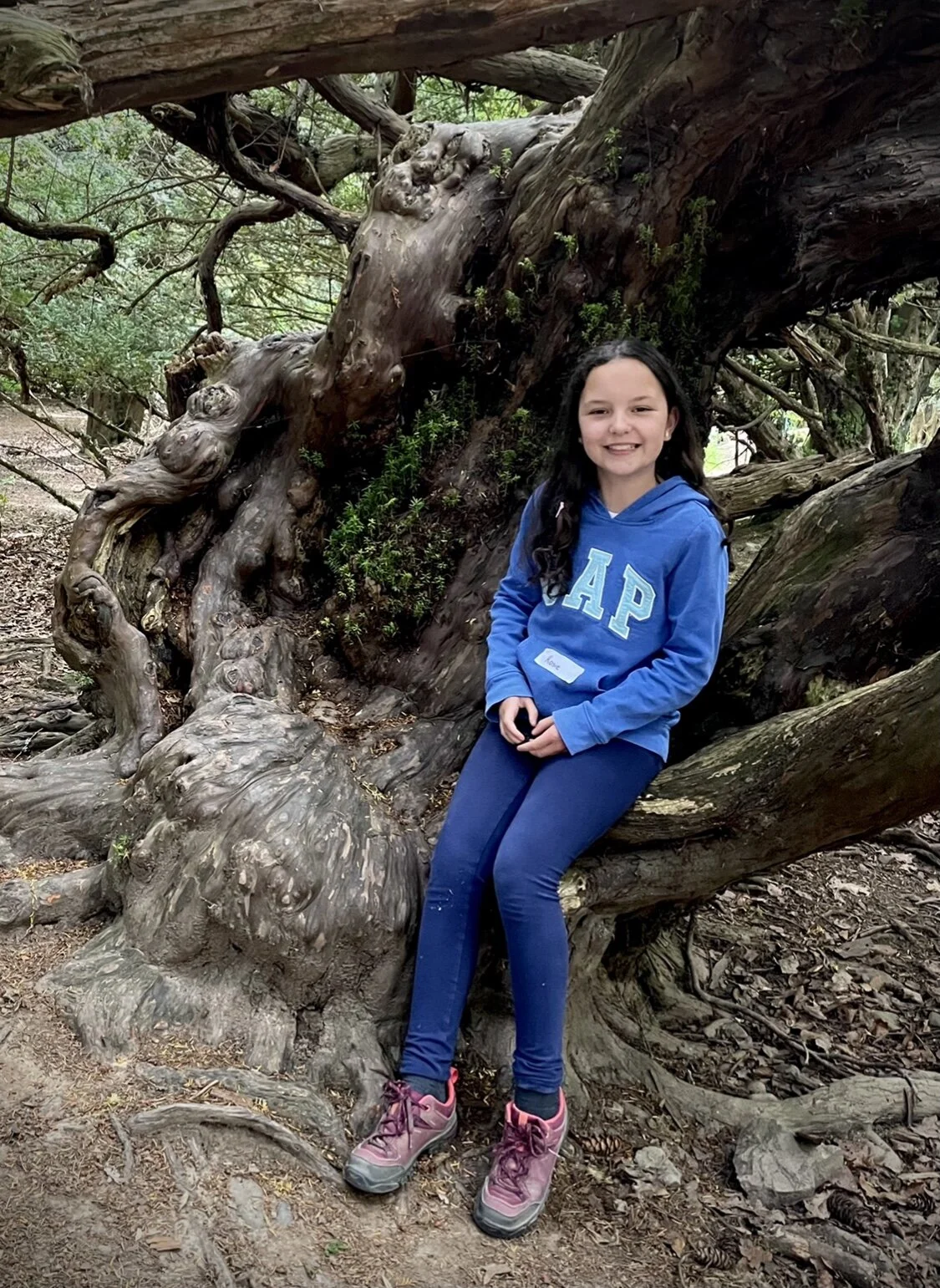
Putting ourselves in the shoes - or seat! - of our ancestors, and imagining how they would have interacted with the natural world
This did not help my nerves. From what I could recall of teen-Charlotte, she believed the big green wild was dirty and boring, and only weird adults like my mother found it fascinating. I remember being convinced that anything of interest in the world wasn’t outside in the woods or fields, but had to be outside the Scottish Borders completely. Perhaps that feeling is just a right of passage, but I wonder if my attitude wasn’t fuelled by invisible barriers between me and the natural world? I definitely remember being told what I couldn’t do outside - don’t go near water, don’t walk on roads, don’t climb anything without an adult present… the list goes on. But was I ever shown what I could do? Without knowing I could craft, transform, build, eat and play, the attraction of the outdoors would have been pretty limited. And without knowing what was safe and what was poisonous, the whole green world might have seemed threatening.
We often forget that before shops, houses, phones and online ordering, humans had to figure out how the natural world could meet all their needs; shelter, food, water, medicine, entertainment, community and spiritual connection. Their most useful tools would have been curiosity, observation and imagination; tools that helped transform butterbur leaves into umbrellas, branches into bowers, or fragrant elderflowers into delicious desserts, and which helped us find healing and nourishing plants. These are skills still available to all humans, even in an age of indoor and virtual living. All we need is the encouragement to discover and activate them. So this became the aim of my workshop - to encourage the group to see the natural world like their ancestors had; as a treasure trove of resources available to them. We practiced basic safety and observation skills, learned to be open to weird flavours, and got our hands dirty with some nettle twine making - all activities that I hoped would make nature less alien and more interesting.
And luckily I was not faced with anyone like my teenage self, but instead had three really engaged and bright groups. The greatest surprise was how much they already knew about the plants around them. I’d assumed that I wouldn’t be able to tear them away from their phones and that their interest in nature would be less than mine had been at that age. Instead, the workshop left me feeling hopeful that some positive evolution had occurred between my generation and theirs, and that they might make better stewards of nature than us.