
Nature Connection? It's child's play. - Wild Harvest Walk, early June 2022
One of the main reasons I do these Wild Harvest Walks every month, is to give others - and myself - the opportunity to build a relationship with the natural world. It’s not all about learning which plants you can eat, it’s also discovering together how to be in this space we call ‘nature’.
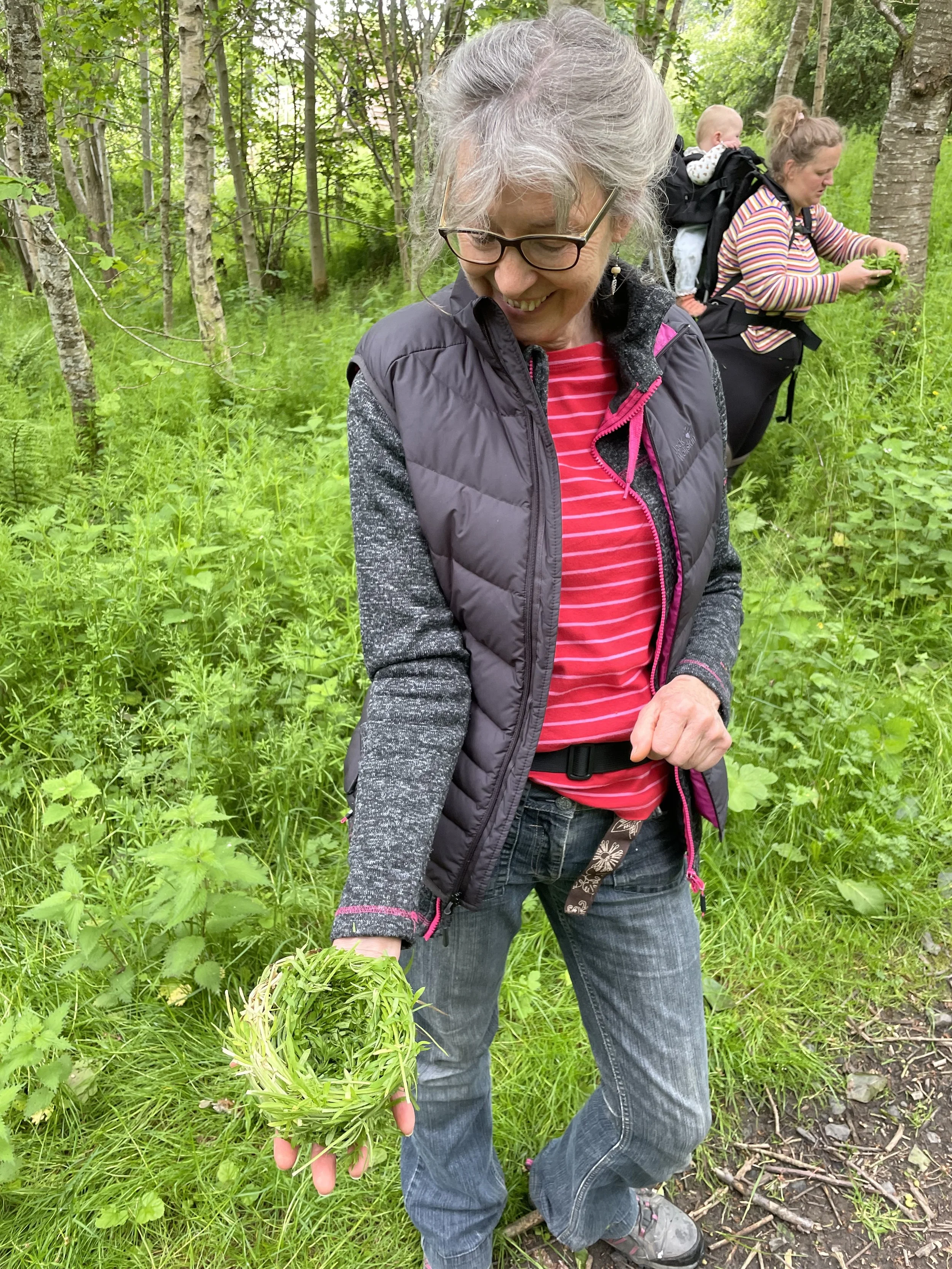
Making a nest/basket from sticky willy
There’s a lot of discussion these days about ‘nature connection’. A growing number of academics, health practitioners, parents and others, are concerned that we spend so little time in the natural world that we have forgotten how to interact with it. A lot of air time is given to shocking stories of children thinking spaghetti grows on trees, or no longer being able to name common birds, plants and animals. It isn’t just children, of course. Most adult lives rotate through only a few indoor spaces each day, and less and less time is set aside for being outside.
So what can we do about it? How can we feel comfortable in the natural world? How can we feel part of it?
At the moment, it can feel as though we are not only physically separated from nature for much of our day, but that we are also at odds with it. In the context of climate change, it can even appear that we are an enemy of nature. It is revealed how little we know about our own food supply, or how our lifestyle is effecting ecosystems on the other side of the planet. Going outdoors becomes fraught with concern regarding our potential impact upon our environment, and as adults we are aware how much we don’t know about what’s out there or how it works. This can be daunting and send us back to the safety of our couch in case we ‘get nature connection wrong’.
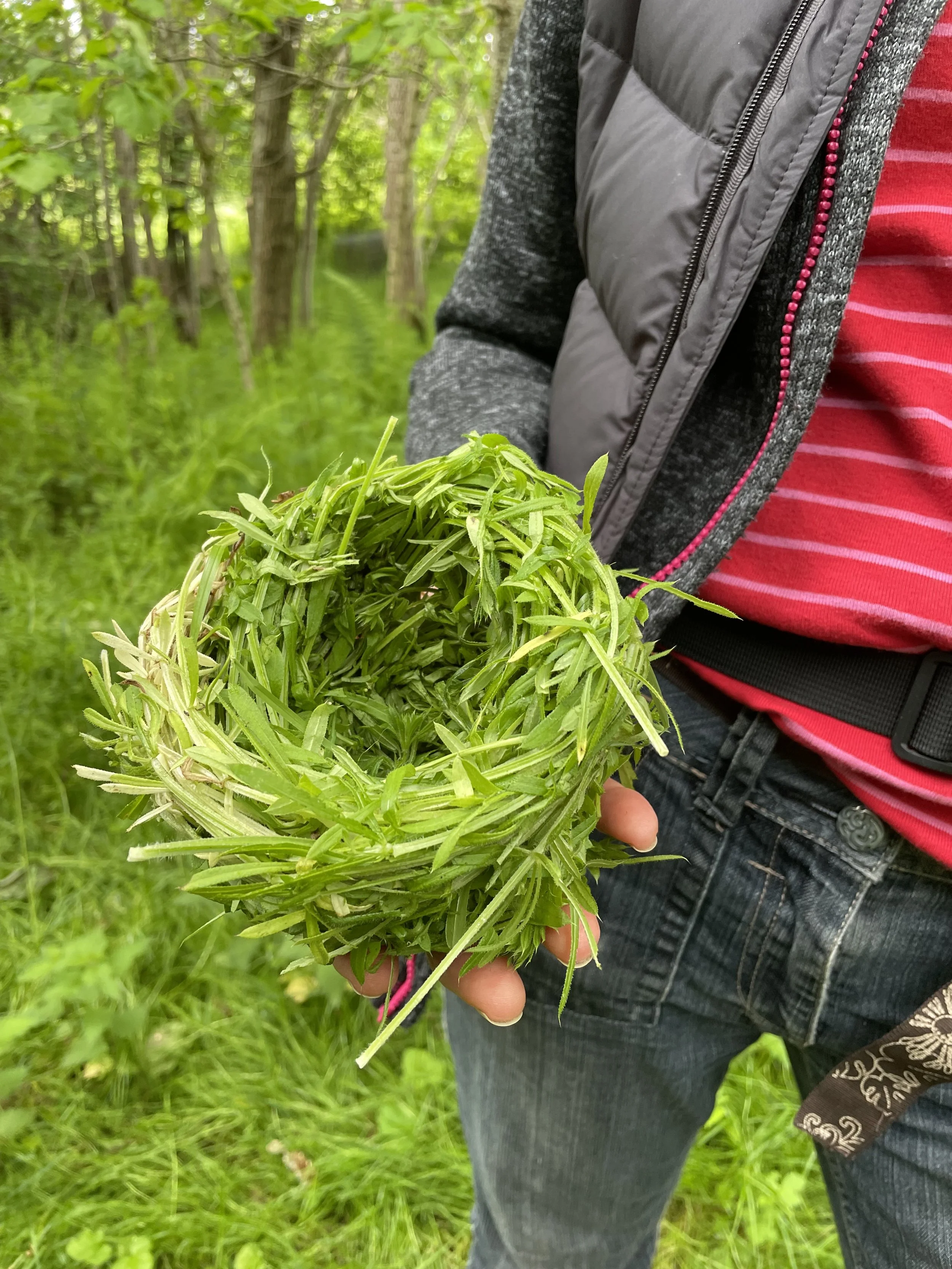
Sticky willy, or cleavers, was often used as a makeshift sieve for straining milk from the cow!
I think we can learn a lot from children, here. Rather than downloading plant identification apps, feeling unprepared because we don’t have the right outdoor gear, or worrying whether we look the part for our Instagram, perhaps it’s best to start with a bit of play.
When babies and young people go outdoors, they encounter the world as shapes, textures, scents, colours and temperatures, - and think only about how they can interact with what they find. Big leaves are used as umbrellas, bright flowers become jewels in a crown, berries are tasted or used as facepaint (usually both), and dark spaces in the hedgerow make inviting dens in which to hide from adults. Some things are scary, of course, until they are poked with a stick and deemed safe. While doing all these things, a million observations are made, memories formed and understanding built, all without effort. This is the kind of behaviour encouraged in Forest School or other outdoor education for children, because play is an incredibly effective way of making children - and adults - feel confident in and part of the space they inhabit.
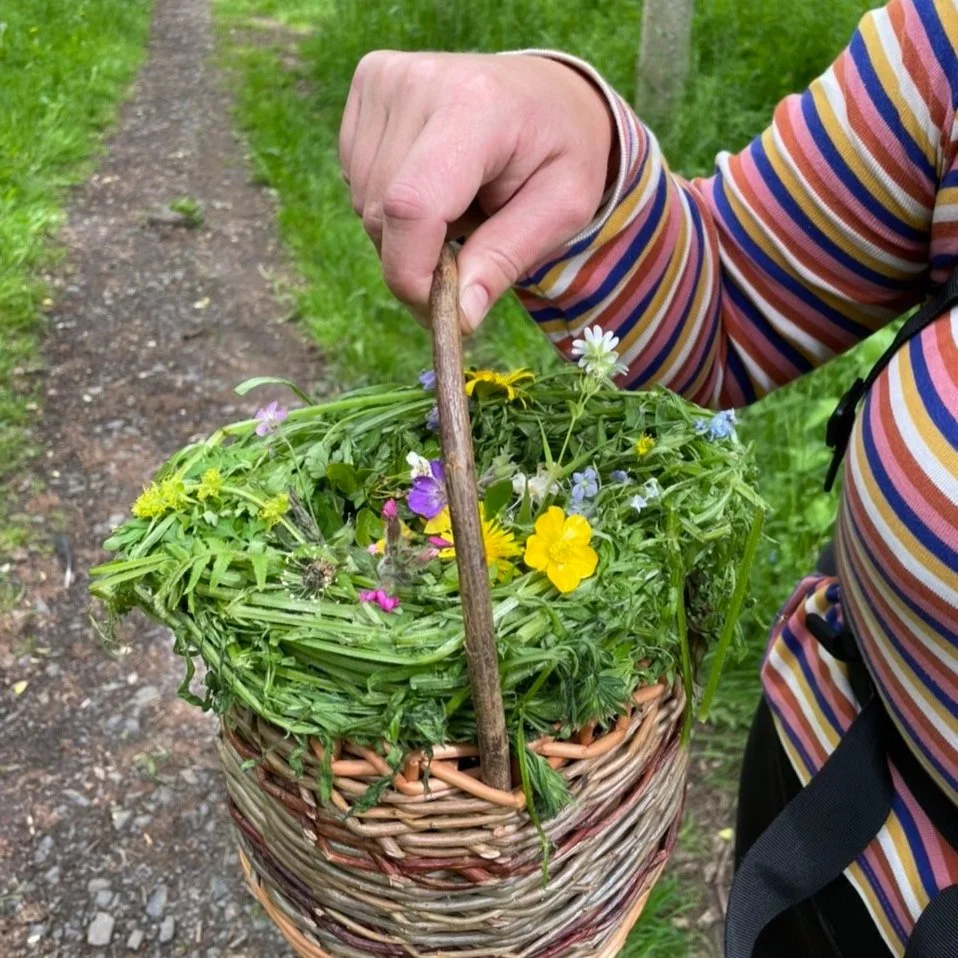
Proud display of collected treasures
This week I encouraged an initially skeptical group to find fun, rather than just facts, in the things we encountered. Channelling their inner child, they wove nests from sticky-willy, collected a rainbow of flowers, played ‘sodgers’ with ribwort flowers, and blew dandelion clocks. By the end of our session, we had a very happy, relaxed bunch meandering their way back to our base at Drygrange.
Another beautiful ‘harvest’ of this session was the number of childhood memories that were shared - detailed stories of first encountering nettles, the technique of making daisy-chains, enjoying the scent of the woods from the shelter of a newly made den, the skills involved in winning at conkers. It is amazing how sharp these memories can remain and how much they are a part of us, even after many years. And that’s because we have formed them in moments of exploration and receptivity - a frame of mind which is simultaneously relaxed and focussed, where we are totally present and not thinking about anything else. This state is created in those that play, and far less in those that are thinking academically or strategically about the experience in front of them.
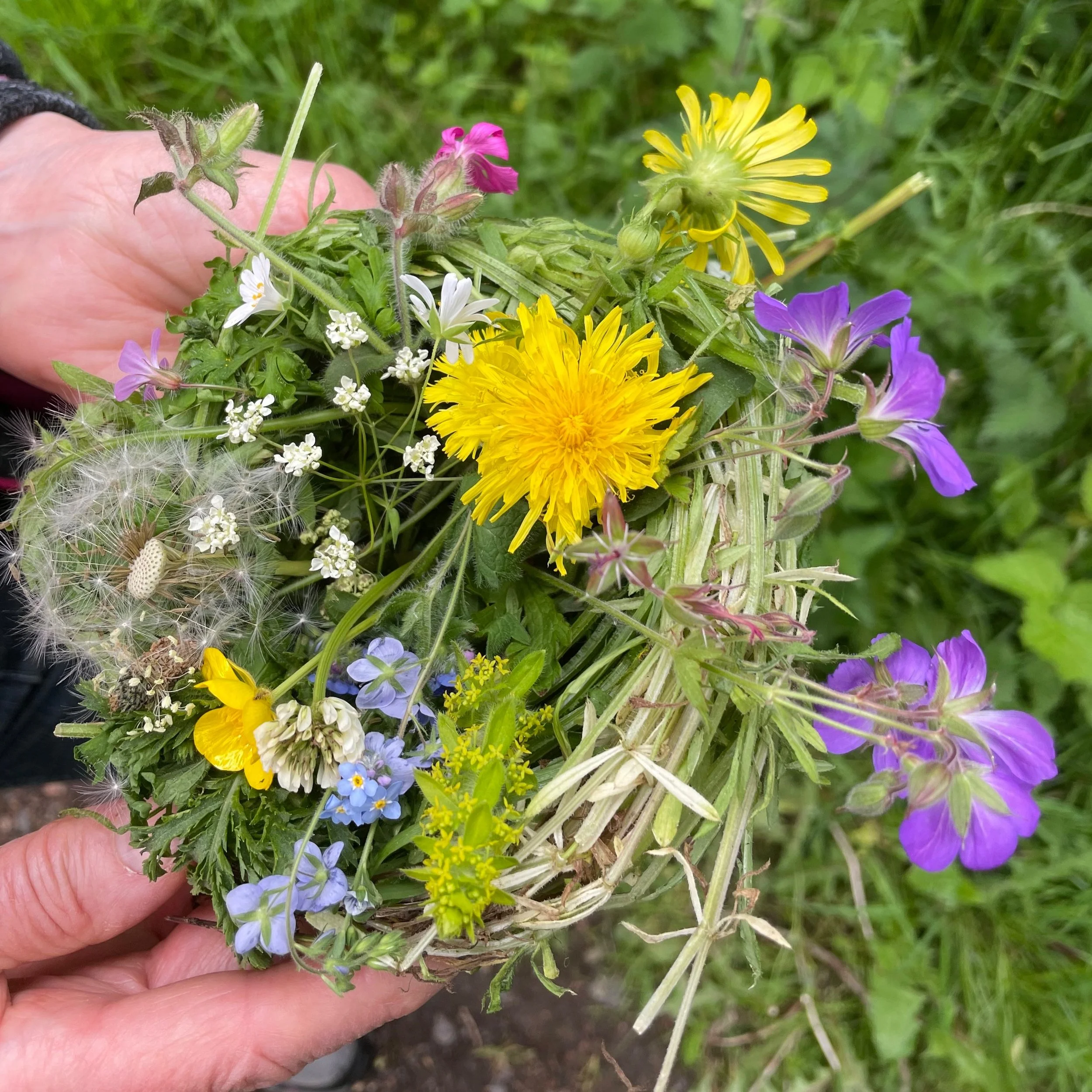
In June there are so many colourful wildflowers in bloom. We only picked flowers and objects when there were large populations of them.
Of course, we did learn about the plants we gathered, and how best to gather them responsibly, but the main lesson of the day was just to enjoy.
For the same reason, I find eating is a very effective way to cultivate a meaningful and positive relationship with plants and animals. When we taste something delicious, we are much more likely to care about that thing and to want it to remain in our world so we can experience it again. And so today ended with a short lesson about nettles. Often disliked, and frequently cooked into a rather revolting slimy soup, the nettle is sorely overlooked. While telling stories of how nettle has sustained people around the world with its powerful nutrients, rich flavour, effective antihistamine, strong fibre and use as a fertiliser, I made a creamy, salty, buttery nettle brose over the campfire. The slightly skeptical countenances returned, but in the spirit of the day everyone was game to try this simple one-pot meal. And then come back for seconds. And then make sure the pot was ‘quite clean’ with their spoons!
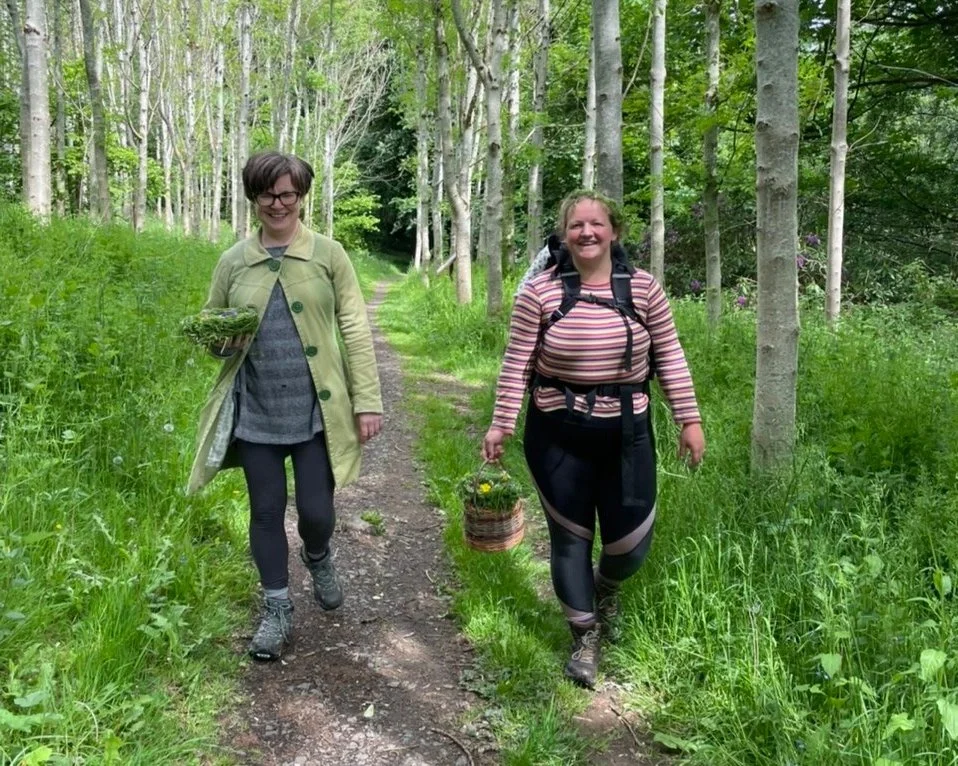
Sophie and Kat, happy and relaxed at the end of our wild harvest walk.
What did we eat?
nettle brose
mint and nettle tea
What did we gather
cleavers or sticky-willy, which we made into baskets
a rainbow of wild flowers and other colourful objects
wood sorrel
Books and resources
WATERMAN, A. 2021. Woodland Wild Flowers. Merlin Unwin.
KENICER, G. 2021. Scottish Plant Lore: an illustrated flora. Birlinn.
MILLIKEN, W. et al. 2013. Flora Celtica: plants and people in Scotland. Birlinn.
LOUV, R. 2005. Last Child in the Woods: Saving our children from nature deficit disorder. Atlantic Books.